

🎧 Listen to this article
Prefer to listen? An audio version of this article is available for accessibility and convenience.
iPadOS 26 turned the iPad Lock Screen into a legitimate customization surface. You can build 3D Spatial Scenes from your own photos, resize and restyle the Liquid Glass clock, stack widgets above and below the time, and link entirely different Lock Screens to specific Focus modes. All of it lives behind a single long press on the Lock Screen that most iPad owners have never tried.
The problem is that Apple buried these options deep enough that you could use your iPad for months and never realize the Lock Screen does anything besides show the time. I set up three custom Lock Screens on my iPad Pro last week, each tied to a different Focus, and the difference in how I interact with the device surprised me. But getting there required poking around in menus that give you almost no guidance. This is the walkthrough I wish I had from the start.
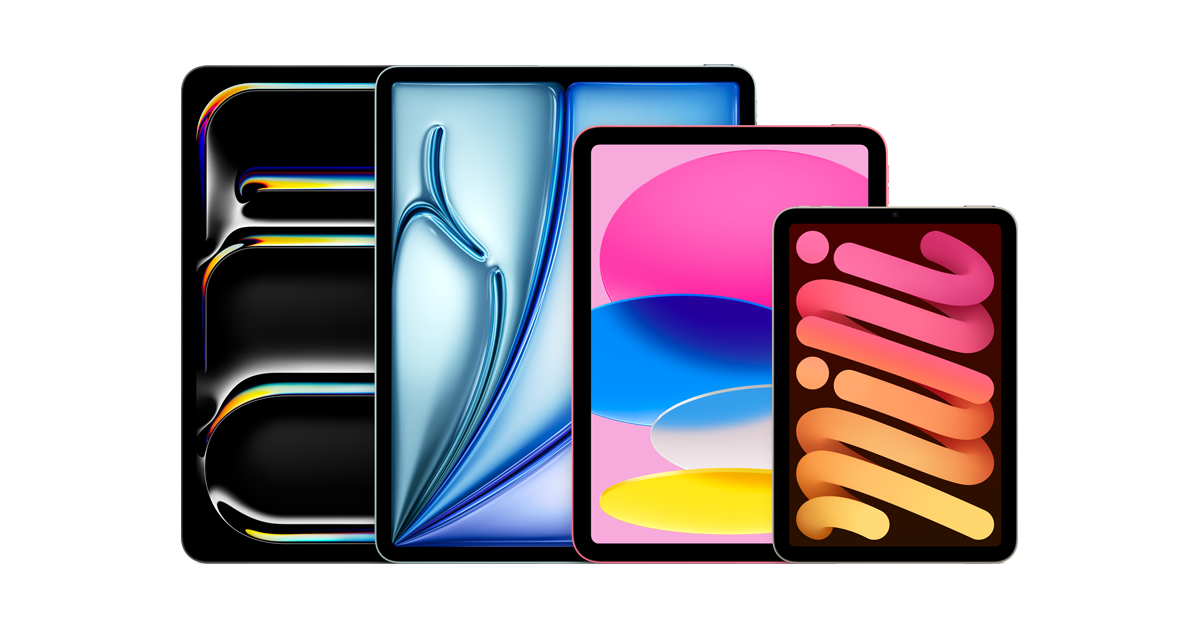
Before you start customizing, confirm that your iPad is running iPadOS 26 or later. If you are not sure which version you have, this guide covers every iPad that supports iPadOS 26 and what each model actually gets.
 Ad
AdHow to actually get to the Lock Screen editor
Long press anywhere on the Lock Screen. That is it. You will see the current wallpaper shrink into a card with a Customize button at the bottom and a plus icon to create a new one. If nothing happens, make sure you are pressing on the wallpaper itself, not on a notification or widget.
The first time I tried this on an iPad Air, I pressed too briefly and just activated Spotlight. The long press needs to be a full second, maybe slightly more. Once you are in, swipe left to browse existing Lock Screens or tap the plus to build one from scratch.
Apple’s official Lock Screen customization guide walks through the basics, but it glosses over the best parts. The features that actually transform the Lock Screen experience are the ones I want to focus on here.
Spatial Scenes turn flat photos into something you want to stare at
This is the headline feature, and it is genuinely impressive. Spatial Scenes takes a regular 2D photo and reconstructs depth from it using on-device machine learning. The result is a Lock Screen wallpaper that shifts in 3D when you tilt your iPad. The subject separates from the background, parallax kicks in, and suddenly your Lock Screen feels like a diorama instead of a poster.
To enable it, go into the Lock Screen editor, choose a photo wallpaper, and look for the hexagon icon. Tap it and the 3D effect applies immediately. Not every photo works well. Portraits with a clear subject and distinct background separation produce the best results. Landscape shots with no obvious foreground element tend to look flat even with the effect on.
One thing that caught me off guard: Spatial Scenes only works on the Lock Screen. Even if you set the same photo as your Home Screen wallpaper, the 3D effect will not carry over. And it requires an iPad with an Apple A14 Bionic chip or later, so older iPads running iPadOS 26 through compatibility will not get this feature. Low Power Mode also disables the effect entirely, which makes sense from a battery perspective but is worth knowing if your parallax suddenly stops working.
The Liquid Glass clock is more adjustable than it looks
iPadOS 26 introduced the Liquid Glass design language, and the Lock Screen clock is where it shows up most dramatically. The default translucent style looks good, but what most people miss is that you can resize it, change the font, and toggle between Glass and Solid rendering.
Tap the clock in the Lock Screen editor. You get six font options. The first font style on the left is the only one that allows you to resize the clock by dragging the bottom-right corner handle. The others lock to a fixed size. I found the resizable option with the Glass style to be the best combination because you can make the time large enough to read from across a room while the translucent effect lets your wallpaper show through.
 Ad
AdiPadOS 26.2 added an extra slider that controls the Liquid Glass intensity of the clock. Select the Glass style and a new slider appears at the bottom of the font picker. Drag it left for more transparency, right for a more opaque, frosted look. It is a small addition that makes a real difference depending on how busy your wallpaper is. A dark, simple background looks great with full transparency. A photo-heavy wallpaper benefits from dialing the glass effect up so the numbers stay readable.
Widgets belong on your Lock Screen now
iPadOS 26 lets you place widgets in two zones: above the clock and below it. Previous versions of iPadOS only allowed widgets above the time, which severely limited what you could display without covering your wallpaper. The below-clock widget area is the real win because it gives you glanceable information right where your eyes naturally land when you pick up the iPad.
Tap Add Widgets in the editor to see what is available. Weather, Calendar, Reminders, Battery, and Fitness are the obvious choices. Third-party apps that support Lock Screen widgets show up here too. I keep a Calendar widget below the clock and a Battery widget above it, and that combination means I almost never need to unlock the iPad just to check my next meeting or charging status.
The adaptive clock feature deserves a mention here. When you set a photo wallpaper, iPadOS 26 automatically repositions the clock and widgets to keep the photo’s subject visible. It works surprisingly well with portrait-oriented images. The clock shifts up or down, and widgets follow. If you manually resize the clock, the adaptive positioning respects your size choice but still adjusts placement. Apple finally acknowledged that people use photos as wallpapers and covering the subject with a giant clock defeats the purpose.
Focus-linked Lock Screens change how you use the iPad
This is where the Lock Screen customization goes from cosmetic to genuinely useful. You can create multiple Lock Screens and link each one to a different Focus mode. When a Focus activates, your iPad automatically switches to the associated Lock Screen, wallpaper, widgets, and all.
I set up three: a Work Lock Screen with a plain dark wallpaper and Calendar plus Reminders widgets, a Personal Lock Screen with a family photo and Weather plus Music widgets, and a Reading Lock Screen with a minimal wallpaper and no widgets at all. When I tap into Work Focus, the iPad transforms visually. When I leave it, the personal wallpaper comes back. It sounds simple, but the context switch is surprisingly effective at putting your brain in the right mode.
To link a Lock Screen to a Focus, enter the editor, swipe to the Lock Screen you want, and tap Focus near the bottom. Select the Focus mode you want to associate. That is the entire process. If you have not set up Focus modes yet, you can do that in Settings under Focus. Once the link is active, toggling the Focus from Control Center automatically swaps your Lock Screen.
One edge case that tripped me up: if you link a Lock Screen to a Focus and then delete that Lock Screen, the Focus does not revert to any specific wallpaper. It just shows whatever Lock Screen was active last. Apple does not warn you about this, so if your Lock Screen suddenly looks wrong after a Focus change, check whether the linked screen still exists.
At a glance: what each customization option gives you
This table compares the four primary Lock Screen customization features in iPadOS 26 by effort required, visual impact, and whether they require a specific iPad model.
| Feature | Setup Effort | Visual Impact | Model Requirement |
|---|---|---|---|
| Spatial Scenes | Low (toggle on) | High (3D parallax) | iPad with A14 Bionic or later |
| Liquid Glass Clock | Low (tap and drag) | Medium (font and size) | Any iPad running iPadOS 26 |
| Focus-Linked Screens | Medium (requires Focus setup) | High (context-switching) | Any iPad running iPadOS 26 |
| Lock Screen Widgets | Low (tap to add) | Medium (glanceable info) | Any iPad running iPadOS 26 |
The wallpaper gallery got a quiet redesign
Apple reorganized the wallpaper picker in iPadOS 26.3 and refined it again in iPadOS 26.4. The gallery now separates wallpapers into distinct categories: Collections, Weather, Astronomy, and Emoji. Each category has a description explaining what it offers, which is a small but welcome improvement over the previous version where everything was dumped into a single scrolling row.
The Weather wallpapers are my favorite addition. They update in real time based on your local conditions. If it is raining outside, your Lock Screen shows rain. Clear skies give you a sunny gradient. The effect is subtle enough to be pleasant without being distracting. Astronomy wallpapers show the current position of the Earth, Moon, or Solar System, which looks striking on the iPad’s larger display.
Photo Shuffle is still here and works the same way it has since iPadOS 16: choose a set of photos from your library and iPadOS cycles through them on a schedule you set. What changed in iPadOS 26 is that the clock now automatically adjusts its size and position based on each photo’s composition. A portrait photo pushes the clock to the top, while a landscape photo centers it. The shuffle feels more polished because the clock is not just sitting on top of every image in the same spot.
What I would set up on a fresh iPad first
If you just updated to iPadOS 26 or you are setting up a new iPad, here is the order I would tackle the Lock Screen in. Start with one photo wallpaper using Spatial Scenes. Pick your best portrait photo, enable the 3D effect, and resize the clock to a size that works with that image. Add one widget below the clock, something you check daily like Weather or Calendar.
Once that feels right, create a second Lock Screen and link it to a Focus. Work Focus is the obvious first choice. Give it a different wallpaper, swap the widgets to productivity-focused ones, and test the automatic switching for a day. If you find yourself reaching for Control Center to toggle Focus modes just to see the Lock Screen swap, that is a good sign. It means the visual context is doing its job.
Skip the Emoji wallpapers unless you are setting up an iPad for a kid. The Astronomy wallpapers are worth trying at least once, especially on a larger iPad Pro display where the Earth visualization actually has room to breathe. And if you use iPadOS 26’s Split View and Slide Over for multitasking, the Focus-linked Lock Screens become even more valuable because they set the stage before you even unlock.
The Lock Screen in iPadOS 26 is one of those features that rewards the ten minutes you spend setting it up with a noticeably better experience every time you glance at your iPad. Most of the customization options are not new to Apple’s ecosystem. iPhone users have had some of these since iOS 16. But on the iPad’s bigger display, with the improved Liquid Glass rendering and Spatial Scenes depth, the whole thing feels like it was designed for a tablet first. It just works better here.

Related Posts
Your iPad Has Seven Ways to Split the Screen and You’re Probably Using One
Mar 04, 2026
iPad Air M3 vs M4: The Real Upgrade Worth Paying For
Mar 03, 2026
The iPad Air M4 Landed With Four Upgrades That Actually Matter
Mar 02, 2026