

🎧 Listen to this article
Prefer to listen? An audio version of this article is available for accessibility and convenience.
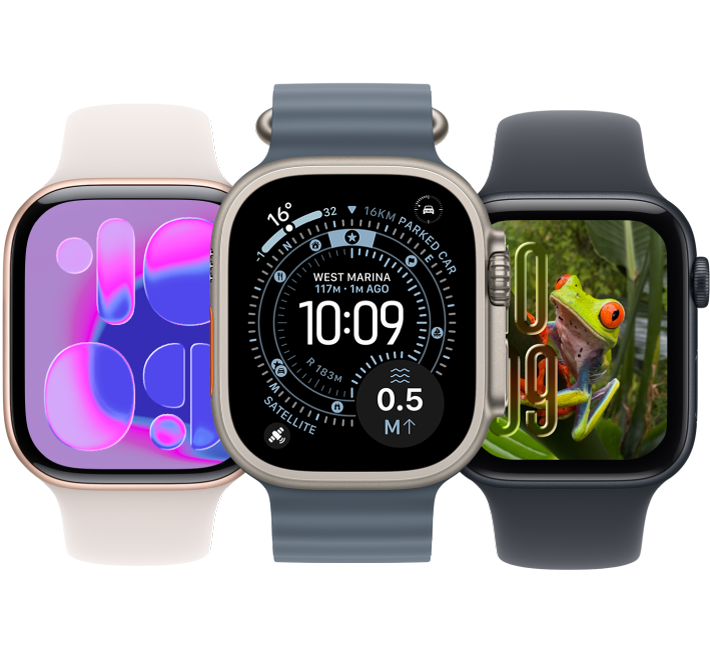
Apple Watch ships with over 60 built-in faces in watchOS 26, and not one of them is made by anyone other than Apple. That number sounds generous until you realize every other Apple Watch owner on the train is wearing the same Modular face with the same weather complication in the same corner. Third-party apps like Facer, Clockology, and Watchsmith get around Apple’s restrictions through three distinct workarounds, each with real strengths and genuine compromises worth understanding before you commit.
The catch is that Apple still refuses to open a native watch face API. Every “third-party face” you see on the App Store is technically a clever hack built on top of Apple’s own face templates, the Photos face wallpaper system, or a full watchOS app running in the foreground. The method you choose determines whether your custom face survives the always-on display, how much battery you lose, and whether your complications still work. I think the workarounds are impressive for what they are, but none of them feel like what Apple could offer if they opened the gates.
If you’ve already explored what stock faces can do, you know the built-in options range from genuinely useful to weirdly limited. What follows is an honest breakdown of the three best third-party approaches, what each one actually does to your watch, and which one deserves your time.
 Ad
AdWhy Apple Still Blocks Third-Party Watch Faces in watchOS 26
Apple VP Kevin Lynch explained the reasoning in a 2023 interview that still applies: the watch face is the home screen of the watch, and Apple wants it to work reliably across every watchOS update without breaking. Battery life is the other stated concern. Your face renders almost constantly, especially on Apple Watch Series 10 and later with always-on displays, and Apple argues that third-party code cannot match their internal power optimizations.
That reasoning is defensible. It is also self-serving. Wear OS has allowed third-party faces for years, and Garmin’s Connect IQ platform hosts thousands of community-made faces. Both platforms manage battery life and stability well enough. Apple’s real advantage from locking down faces is design control: every Apple Watch looks like an Apple Watch, which is a branding decision wrapped in an engineering justification.
The practical result is that developers can build WidgetKit complications (the small data displays on a face) but cannot touch the face itself. Apple’s developer documentation for accessory widgets defines four complication families: circular, rectangular, corner, and inline. That’s the entire surface area Apple gives third parties. Everything beyond that is a workaround.
Facer Gives You Thousands of Designs Without Touching Battery Life
Facer is the most popular watch face app on the App Store, with a 4.6-star rating across roughly 54,000 reviews, and its approach is the most conservative of the three. You browse faces in the iPhone app, tap Sync, and Facer sends a configured .watchface file to your Apple Watch. That file uses Apple’s built-in Photos face as the template, sets your chosen design as the wallpaper image, and pre-configures whichever complications the designer specified.
The upside is significant. Because Facer faces are technically native Apple faces with a custom image, they work with always-on display, they don’t drain extra battery, and they survive watchOS updates. You keep Apple’s standard time rendering and complication slots. The design library is enormous: minimalist digital layouts, retro analog dials, pop-culture themes, and hundreds of community creations uploaded weekly.
The downside is equally real. You are fundamentally looking at a picture on the Photos face. The intricate animated dials and moving elements you see in Facer’s preview screenshots are static on your wrist. Complications come from the Facer app itself or from Apple’s standard sources, but they sit on top of a flat image, which means the visual integration between the wallpaper and the complication text can feel disconnected. Some designs look polished; others look like a smartphone wallpaper shrunk to fit a 45mm screen.
Facer offers a free tier with limited designs and a premium subscription that unlocks the full library. I find the free options adequate for testing whether the approach works for you, but the premium faces are where the design quality noticeably improves.
Clockology Renders Full Custom Faces at the Cost of Battery and Always-On
 Ad
AdClockology is the ambitious one. Where Facer works within Apple’s face system, Clockology ignores it entirely. The app renders a fully custom clock interface as a watchOS app running in the foreground. You download .clock files from the Clockology community, sync them to your watch, and the app displays layered designs with video backgrounds, animated dials, weather data, and health metrics pulled from HealthKit. The visual results are stunning. Think luxury watch homages, retro digital designs, and creative faces that look nothing like anything Apple ships.
The setup process is fiddly. Clockology requires you to download a beta-enable file through Safari to unlock its sync mode. That alone will lose half the audience. Once enabled, you adjust two watchOS settings: Wake Duration to 70 Seconds and Return to Clock to After 1 Hour. These keep the Clockology app visible on your wrist instead of bouncing you back to your real Apple face every time the screen dims.
And here is the honest catch: Clockology faces are not watch faces. They are a running app. When your wrist drops, the always-on display goes blank or shows your actual Apple face underneath. Every hour, watchOS nudges you back to the real face unless you re-open the app. Battery drain is noticeable. On an Apple Watch Series 11 with the always-on display active, running Clockology as my primary “face” for a full day cost roughly 15 to 20 percent more battery than a native face. That pushed me from a comfortable 36-hour charge to barely hitting bedtime.
Clockology earns its 4.8-star rating because the designs are genuinely exceptional, and for people who charge their watch every night anyway, the battery trade-off is tolerable. But going in with clear expectations matters. This is a workaround with real friction, not a seamless native experience.
Watchsmith Customizes What Sits on Your Face Instead of Replacing It
Watchsmith, built by indie developer David Smith, takes the opposite approach from both Facer and Clockology. Instead of replacing your watch face, it gives you 43 custom complication sources across ten categories: Date, Time, Calendar, Activity, Weather, Tides, Astronomy, Timezone, Battery, and Blank. You keep whatever Apple face you prefer and fill its complication slots with Watchsmith’s data.
The standout feature is dynamic scheduling. You can set complications to change automatically throughout the day based on time rules you define. Weather in the morning, calendar at midday, Activity rings in the evening. No other complication app does this with the same flexibility, and it transforms a single face into something that adapts to how you actually use your watch. If you’ve already customized your watch faces in watchOS 26 and want to push the complications further, Watchsmith is where you go.
The limitation is scope. Watchsmith does not change how your face looks. The font, the layout, the background, the time display—all Apple. What changes is the data inside each complication slot. For some people, that is exactly the right amount of customization. For others, it misses the point entirely.
How the Three Approaches Compare at a Glance
The method each app uses determines what you gain and what you give up. This table breaks down the practical differences that matter most on your wrist.
The three main approaches to third-party Apple Watch faces compared by method, cost, and trade-offs.
| App | Method | Always-On Display | Battery Impact |
|---|---|---|---|
| Facer | Photos face wallpaper + .watchface files | Yes (native face) | Minimal |
| Clockology | Full watchOS app overlay | No (app goes blank) | Noticeable |
| Watchsmith | Custom WidgetKit complications | Yes (native face) | Minimal |
Which Approach Deserves Your Time
Start with Facer if visual variety is what you want. The battery impact is zero, always-on display works, and the library is deep enough that you will find something better than Apple’s stock options within ten minutes of browsing. The free tier is sufficient for testing.
Try Clockology if you charge nightly and want faces that look nothing like what Apple provides. The setup friction is real but manageable, and the design ceiling is the highest of the three. Just expect the always-on display to show your actual Apple face when your wrist drops.
Choose Watchsmith if your frustration is with complications, not the face itself. Dynamic scheduling alone justifies the download. Your watch face becomes a living dashboard instead of a static arrangement of data.
The uncomfortable truth is that all three apps exist because Apple chooses to keep watch faces locked. That decision protects battery life and brand consistency, and it also means the most creative part of wearing a watch—making it look like yours—still depends on workarounds. Apple’s support documentation for watch faces lists every built-in option, and those options are well-designed. They are also the same ones everyone else is wearing.
Accessibility and Clarity for Custom Watch Faces
VoiceOver compatibility varies sharply across these apps. Facer faces that use the native Photos template inherit Apple’s built-in VoiceOver support for time readout and complications. Clockology faces, because they run as a foreground app, lose native VoiceOver integration entirely—the screen reader announces the app name rather than the time, which makes Clockology a poor choice for users who rely on spoken time announcements. Watchsmith complications work within Apple’s WidgetKit framework and retain full VoiceOver labels.
For users with low vision, Facer’s photo-based faces sometimes have poor contrast between time numerals and the background image. Check the preview on your iPhone before syncing—if you cannot comfortably read the time in the preview, the 45mm screen will be worse. Apple’s native faces with the Extra Large complication family remain the most legible option for users who need high-contrast, scalable text.
The Friction You Only Notice After a Week
The .watchface file sync from Facer works reliably about 90 percent of the time. The other 10 percent, the file lands on your watch but the wallpaper image fails to load, leaving you with a blank Photos face showing the default gradient. Deleting and re-syncing fixes it, but the failure is silent—you do not get an error message, just a face that looks wrong. I learned to check my wrist immediately after every sync.
Clockology’s hourly return-to-clock behavior is the bigger daily annoyance. watchOS checks in every 60 minutes and bounces you to your real face. If you glance at your wrist at the wrong moment, you see your old Modular face staring back at you, and you have to physically open the Clockology app again. A few community members have found that setting a Focus mode shortcut can partially automate this, but it is not seamless. If you have already explored the thousands of faces available through community sharing, these apps are the natural next step for anyone who wants even more variety.

Related Posts
Build the Custom Apple Watch Face You Actually Want
Apr 06, 2026
Your Apple Watch Band Has a Cleaning Method Most Owners Skip
Apr 02, 2026
Your Apple Watch Has a Sleep System Most Owners Never Touch
Apr 02, 2026