
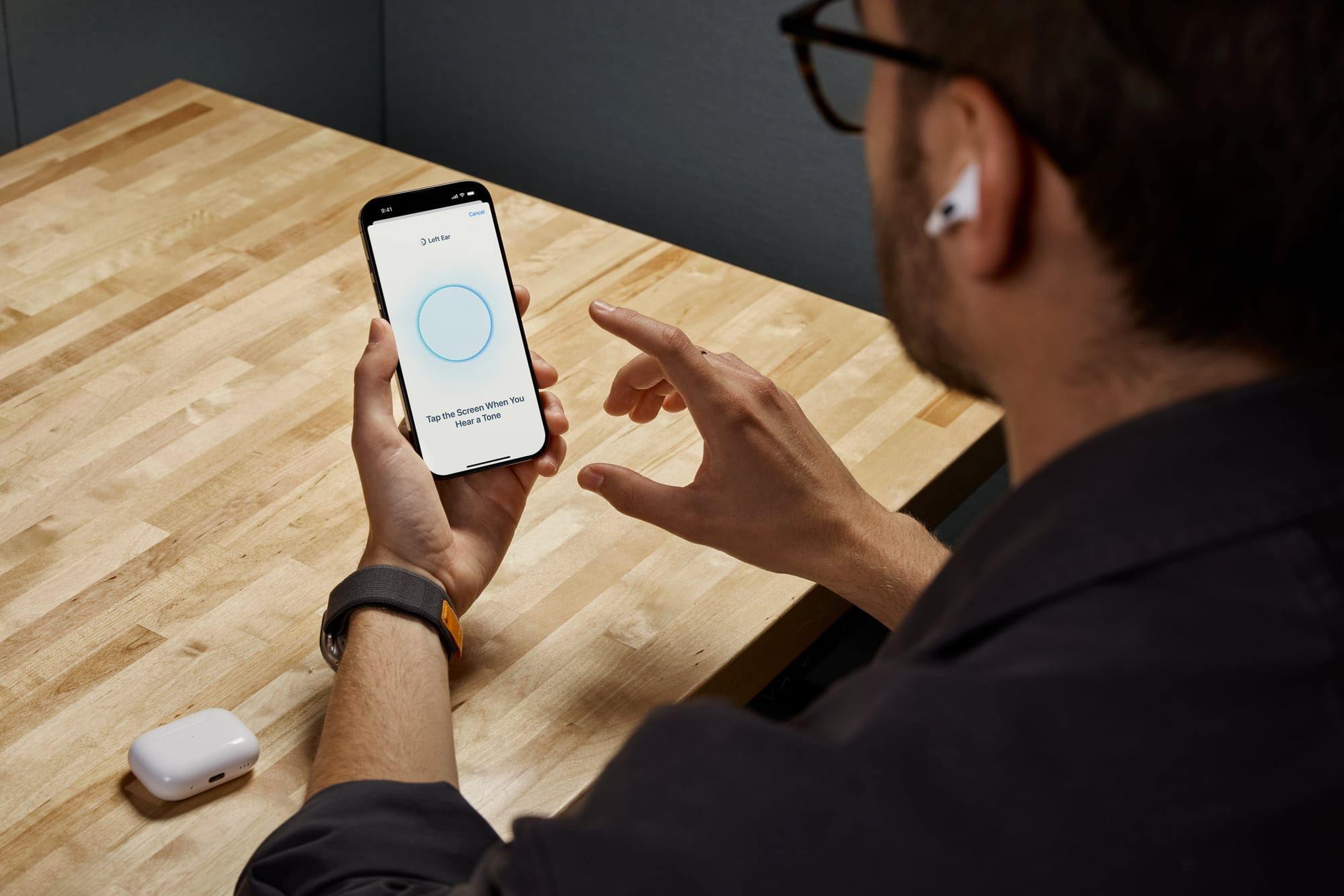

🎧 Listen to this article
Prefer to listen? An audio version of this article is available for accessibility and convenience.
AirPods Pro 3 connect to any Android phone over standard Bluetooth 5.3, and the features that matter most — Active Noise Cancellation, Transparency mode, and solid audio playback — all work without installing a single app. The pairing process takes about twenty seconds.
The catch is everything Apple doesn’t mention. About a dozen features — automatic ear detection, Spatial Audio, Adaptive Audio, Conversation Awareness, Find My tracking — silently vanish the moment you pair your AirPods with something that doesn’t run iOS. And the audio quality itself takes a measurable hit, because Android handles the AAC Bluetooth codec differently than Apple’s own hardware does. The experience is still good. It’s just not the full experience, and knowing exactly where the lines are drawn matters before you hand your AirPods to someone with a Samsung or start using them with a work-issued Android phone.
 Ad
AdHow to Pair AirPods to an Android Phone
Open the AirPods charging case with both earbuds inside. Press and hold the setup button on the back until the status light flashes white — that puts them into pairing mode. On AirPods 4, you double-tap the front of the case instead. For AirPods Max 2, press and hold the noise control button on the right ear cup.
On the Android phone, go to Settings, then Connected Devices, then Pair New Device. AirPods should appear in the available devices list within a few seconds. Tap the name, confirm any permission prompts, and you’re done. The next time you open the case near that phone, they’ll reconnect automatically. I do want to flag one friction point: the status light on the AirPods Pro 3 case is small enough that in bright sunlight, you genuinely cannot tell if it’s flashing white or amber. A shaded spot helps.
Every Feature That Survives the Switch
The important stuff works. Active Noise Cancellation runs natively — long-press the stem and it toggles on. Transparency mode works the same way; a long-press cycles between ANC and Transparency. Volume control via the stem swipe on AirPods Pro 3 responds just as it does on iPhone. Play, pause, skip forward, skip back — all the squeeze and double-tap gestures behave normally.
The microphone works for calls and voice input. You can trigger Google Assistant by voice if your Android phone supports it. And if your AirPods lose connection, they’ll automatically reconnect when you open the case nearby — no re-pairing required. If you want the full picture of what each listening mode does, Zone of Mac has a complete breakdown of every AirPods noise cancellation mode worth reading.
It does, though, mean that ANC and Transparency are the only two noise control options you get. On iPhone, you also get Adaptive Audio and an Off mode. On Android, long-pressing the stem cycles between just two states. If you want to add Off as a third option, you need to configure that through an iPhone first — or use a third-party app I’ll mention shortly.
 Ad
AdWhat Apple Quietly Locks Behind iPhone
Here’s where the gap becomes real.
Automatic ear detection doesn’t work. Remove one earbud and your music keeps playing. Put them back in and nothing resumes. You’ll need to pause manually every time.
Spatial Audio, Personalized Spatial Audio, and head tracking are all disabled. These require Apple’s proprietary protocols and an iPhone or iPad to calibrate.
- Adaptive Audio — the mode that blends ANC and Transparency based on your environment — requires an Apple device.
- Conversation Awareness, which drops your music volume when you start talking, is gone.
- Personalized Volume, which adjusts levels based on your listening habits, doesn’t function.
- Find My tracking is completely unavailable. If you lose an earbud, Android has no way to locate it.
- Battery levels don’t appear natively. No widget, no notification, no status bar indicator.
You also cannot customize what the stem gestures do. Whatever configuration your AirPods had when they last connected to an iPhone is what you’re stuck with on Android.
That last point catches people off guard. The control mapping is baked into the AirPods firmware by the last Apple device that configured them, and Android has no way to change it.
A quick look at what AirPods can and cannot do when paired with an Android phone versus an iPhone.
| Feature | Android | iPhone |
|---|---|---|
| Active Noise Cancellation | Works | Works |
| Transparency Mode | Works | Works |
| Stem Controls | Works (not customizable) | Full customization |
| Automatic Ear Detection | Not available | Works |
| Spatial Audio | Not available | Works |
| Find My Tracking | Not available | Works |
| Battery Display | Third-party app needed | Built-in widget |
The Audio Quality You Actually Get
AirPods support two Bluetooth codecs: AAC and SBC. No aptX, no LDAC, no high-resolution option. On an iPhone, Apple’s custom silicon handles AAC encoding in dedicated hardware, producing clean 256 kbps audio with frequency response reaching roughly 18.9 kHz.
On Android, AAC encoding runs in software and gets throttled by Android’s power management. Independent testing from SoundGuys found the noise floor jumped from −91 dBFS on an iPhone to −73 dB on a Samsung Galaxy — and as high as −42 dB on some Huawei devices. That’s a real, measurable degradation, not a theoretical one. Apple publishes the Bluetooth codec specifications for every AirPods model on its AirPods technical specifications page, which confirms the AAC and SBC limitation across all current models.
In practice, the difference is subtle for casual listening — podcasts, phone calls, and most pop music sound fine. But if you’re paying attention during quiet classical passages or acoustic recordings, you’ll hear it. Some Android users actually get more consistent results by forcing SBC instead of AAC, since SBC encoding is uniform across every Android phone. It’s not better. It’s just predictable.
Two Apps That Close the Gap
MaterialPods is the practical recommendation. It’s free on Google Play with over three million installs, and it solves the most annoying gap — battery visibility. The app displays individual earbud and case battery percentages in a notification and optional widget, and adds basic ear detection. It supports every AirPods model from the original through AirPods Pro 3.
LibrePods goes further. It’s an open-source project that reverse-engineers Apple’s proprietary protocols to trick your AirPods into thinking they’re connected to an iPhone. It can restore ear detection, Conversation Awareness, head gestures for calls, and three-way noise control mode switching. The catch is significant: full functionality requires a rooted Android device with the Xposed framework installed. If “rooted Android” sounds like too much work, it probably is — and for everyone else, MaterialPods handles the essentials without any of that complexity.
Before sharing your AirPods with an Android user, configure the stem controls and noise modes exactly the way you want them while you still have access to the full settings on your iPhone. Zone of Mac has a full guide to every AirPods setting on your iPhone — worth reading so those choices carry over exactly the way you intended.

Related Posts
Your AirPods Are Collecting Grime That’s Killing Your Sound
Apr 09, 2026
Your AirPods Have a FaceTime Trick That Changes Group Calls
Apr 02, 2026
Every AirPods Setting on Your iPhone and What Each One Actually Does
Mar 29, 2026