

🎧 Listen to this article
Prefer to listen? An audio version of this article is available for accessibility and convenience.
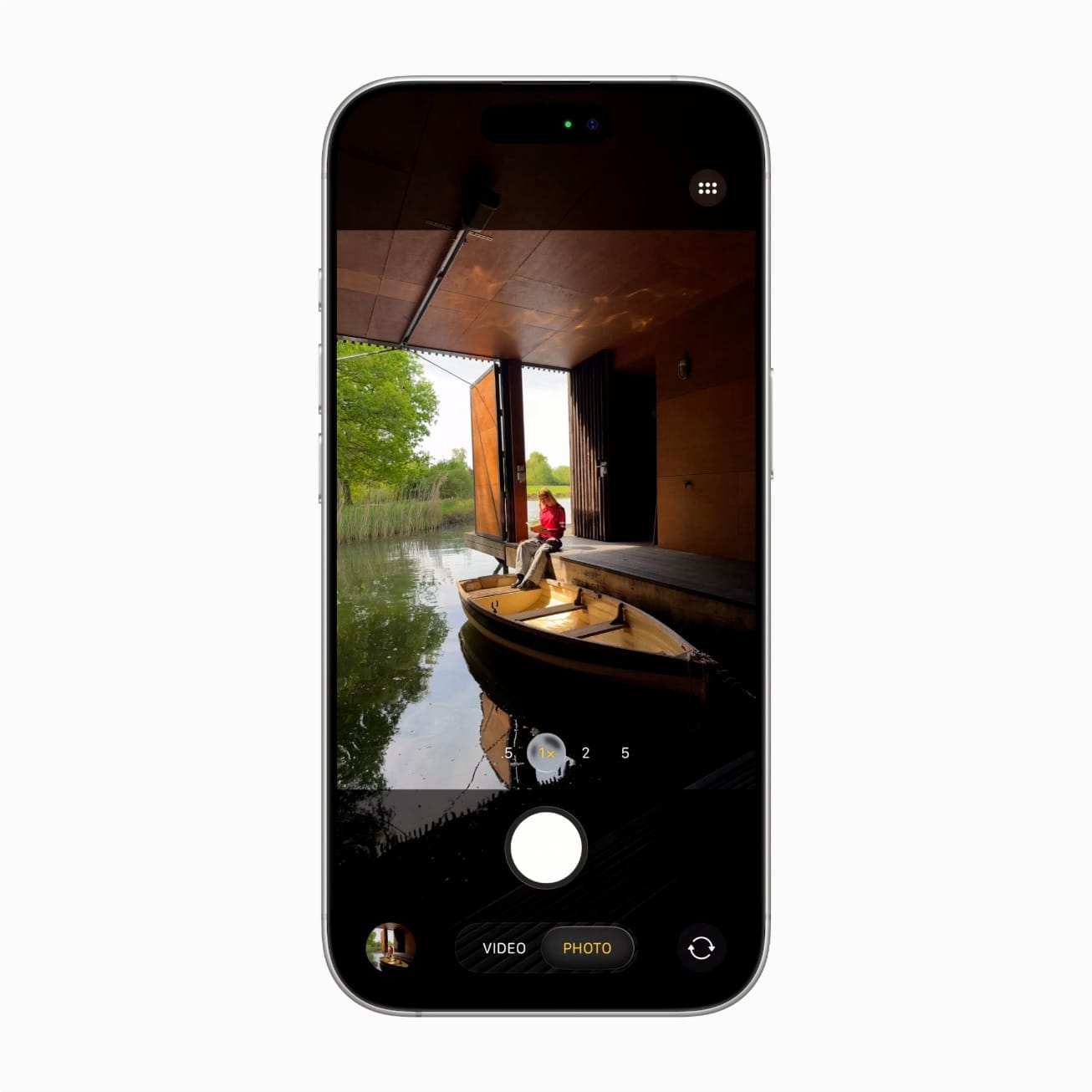
The yellow flower icon that appears in your iPhone Camera app means your phone just switched lenses. Specifically, it swapped from the main Wide camera to the Ultra Wide camera because you moved close enough to a subject — roughly 14 centimeters or about five and a half inches — for the system to decide you want a macro shot. The Ultra Wide lens can focus as close as 2 centimeters from a subject, which is absurdly close, and the results at that distance can genuinely surprise you.
But here is the catch most people miss: that automatic lens switch changes more than just the focus distance. It moves you to a physically smaller sensor with a wider field of view, and unless you know how to control the behavior, the camera will keep switching back and forth while you are trying to frame a normal close-up shot of your lunch or a document on your desk.
 Ad
AdEvery iPhone That Supports Macro Mode
Macro photography on iPhone started with the iPhone 13 Pro and iPhone 13 Pro Max in 2021. For three generations, it stayed exclusive to Pro models. Apple changed that with the iPhone 16 lineup, which brought macro mode to the standard iPhone 16 and iPhone 16 Plus for the first time. The reason: Apple finally added phase-detection autofocus to the non-Pro Ultra Wide lens.
On current models, here is where things stand. The iPhone 17 Pro and iPhone 17 Pro Max capture macro shots at a full 48 megapixels through the Ultra Wide lens when shooting in Apple ProRAW. The standard iPhone 17 supports macro too, but its Ultra Wide sensor captures at 12 megapixels. That difference matters if you plan to crop or print, but for social media or quick reference shots, both produce sharp results at the center of the frame.
I find it worth noting that the iPhone 15 and earlier non-Pro models do not support macro mode at all. If you own one of those phones and you are not seeing the flower icon, that is why.
How to Stop the Camera From Switching Lenses on Its Own
The automatic lens switch is the single biggest frustration with iPhone macro mode. You bring your phone close to photograph a receipt, a product label, or a handwritten note, and the viewfinder jumps as the camera swaps lenses without asking. The image quality shifts, the field of view changes, and if you were trying to keep the framing steady, you have to start over.
Apple’s fix lives in Settings, then Camera, then toggle on Macro Control. Once that is enabled, a small flower icon appears in the corner of the viewfinder whenever the camera wants to switch to macro. Tap the icon to block the switch. Tap it again to allow it. If you have not explored the rest of your Camera settings recently, these iPhone camera settings deserve a closer look too.
There is a second step most guides skip. By default, your Macro Control preference resets every time you close the Camera app. To make it stick, go to Settings, then Camera, then Preserve Settings, and turn on Macro Control. Without this, you will be tapping that flower icon every single session, which defeats the purpose.
While I appreciate that Apple eventually added this control, the fact that it shipped the iPhone 13 Pro without any macro override at all — and that the preserve-settings toggle still is not on by default — tells me this feature was designed by someone who tested it in a lab with perfect subjects, not in a kitchen trying to photograph a recipe card.
 Ad
AdWhat Actually Happens When Macro Mode Activates
When the flower icon appears and the camera switches, three things change simultaneously. First, the active lens moves from the main Wide sensor (the large one, typically 1/1.28 inches on Pro models) to the much smaller Ultra Wide sensor (1/2.55 inches). Second, the native field of view jumps to 120 degrees, though the camera software crops it back to approximate the 1x view you were using. Third, the minimum focus distance drops from about 15 centimeters on the main camera down to roughly 2 centimeters on the Ultra Wide.
That sensor size difference is not trivial. The main camera sensor collects significantly more light, produces less noise, and delivers better dynamic range. Switching to the Ultra Wide for macro means you are trading raw image quality for the ability to focus on something inches away. In bright daylight, the trade-off is usually invisible. In a dimly lit room, you will notice more grain and softer detail, especially toward the edges of the frame.
One edge case that still bothers me: the viewfinder continues to display “1x” even after switching to the Ultra Wide lens. This makes sense from a framing perspective — Apple crops the wider view to match — but it means there is no obvious on-screen indicator that you have changed lenses aside from that small flower icon. If you are new to iPhone photography, you might not realize the camera just moved to an entirely different sensor.
Getting Genuinely Sharp Macro Shots
Depth of field at 2 centimeters from a subject is razor thin. Moving your hand forward or backward by a millimeter or two can throw the entire subject out of focus. I have missed more macro shots to slight hand movement than to any other cause.
Tap and hold on your subject in the viewfinder to lock focus and exposure. The AE/AF Lock banner appears at the top of the screen, and now you can make small adjustments to your composition without the camera hunting for a new focus point. This single gesture improves macro hit rate dramatically. For more techniques that sharpen your iPhone photography, these seven iPhone Photos tricks are worth your time.
Lighting matters more at macro distances than almost any other iPhone photography scenario. The Ultra Wide lens sits at f/2.2, which is slower than the main camera’s f/1.78 on most Pro models. Combined with the smaller sensor, this means the camera needs more ambient light to keep shutter speeds fast enough to freeze detail. If you are shooting something indoors — a watch face, a circuit board, a flower petal — position it near a window or use a small LED light. The difference between a sharp macro shot and a blurry one is almost always about light, not technique.
Keep your lens clean. This sounds obvious, but at macro distances, a fingerprint smudge on the Ultra Wide lens element is not just a soft spot in the image — it can dominate the entire frame. A quick wipe with a microfiber cloth before shooting saves the trouble of editing later.
Macro Mode in Third-Party Apps
Even if you disable automatic macro switching in the native Camera app, third-party apps like Instagram, Snapchat, and FaceTime can still trigger macro mode on their own. There is no system-wide toggle to prevent this. Each app uses the camera API independently, and most do not expose a macro control. If you have ever noticed the camera jumping while trying to scan a QR code in a banking app or photograph something close in Instagram Stories, this is likely the reason.
Thankfully, the native Camera app respects your Macro Control setting consistently once you enable Preserve Settings. Apple’s support page on macro photography confirms the full list of compatible models and modes. But if close-up shooting in other apps frustrates you, know that it is a platform limitation Apple has not addressed at the API level.
Quick-Action Checklist
- Open Settings, tap Camera, and enable Macro Control.
- Open Settings, tap Camera, tap Preserve Settings, and enable Macro Control.
- In the Camera app, watch for the yellow flower icon when moving close to a subject.
- Tap the flower icon to toggle macro on or off for that shot.
- Tap and hold your subject to lock focus before shooting.
- Clean the Ultra Wide lens before macro sessions.
- Shoot near natural light or add a small LED for indoor subjects.

Related Posts
The iPhone 17e Gives You Apple’s A19 Chip for $200 Less Than You’d Expect
Mar 04, 2026
Your iCloud Runs Out of Space Because Apple Buries the Fix Three Menus Deep
Mar 04, 2026
Your iPhone Has a Privacy Display Mode You Have Never Turned On
Mar 03, 2026