

🎧 Listen to this article
Prefer to listen? An audio version of this article is available for accessibility and convenience.
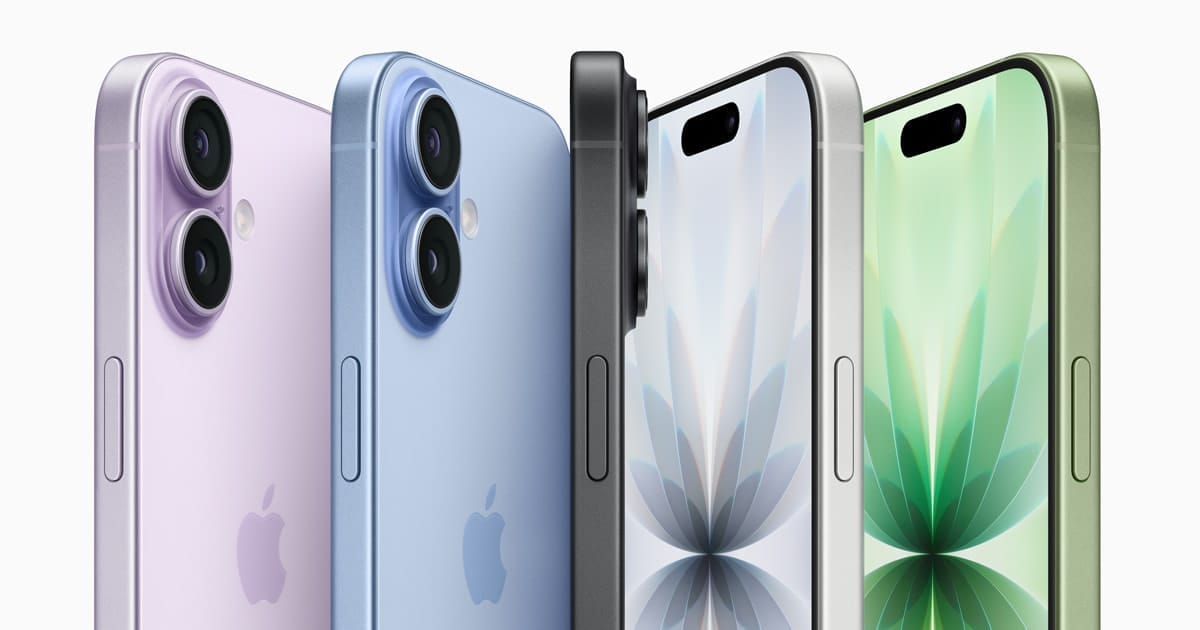
The iPhone 17 starts at $799, gives you a 120Hz ProMotion display, a 48-megapixel dual camera system, and the A19 chip with 30 hours of video playback. For most people, that is the entire conversation. But then Apple went and gave the Pro models an 8x optical zoom, ProRes RAW video recording, and a vapor chamber cooling system that sustains peak performance 40 percent longer than anything in the standard model. The gap between “good enough” and “built for a specific kind of user” has never been wider in Apple’s iPhone lineup.
I spend a lot of time thinking about which Apple devices actually earn their price tags, and the iPhone 17 generation is a genuinely interesting case. Apple narrowed some of the gaps that used to push people toward Pro — the standard model now gets ProMotion and Always-On display, features that were Pro-exclusive just two years ago. It does, though, mean that the remaining Pro advantages are more specialized, more niche, and harder to justify unless you know exactly why you need them.
Here is every practical difference that matters, and the honest trade-offs Apple would rather you not think too hard about.
 Ad
AdWhat the Standard iPhone 17 Actually Gets You
The iPhone 17 is not the compromise it used to be. Apple dropped a 6.3-inch Super Retina XDR OLED display into this model with adaptive refresh rates up to 120Hz, which means scrolling through Safari and swiping between apps feels identical to the Pro. The Always-On display is here too — your Lock Screen stays visible with the time and widgets dimmed, pulling barely any extra battery.
The A19 chip runs a 6-core CPU with 5-core GPU and 16-core Neural Engine, paired with 8 gigabytes of RAM. That is more than enough horsepower for Apple Intelligence features, real-time photo processing, and anything you throw at it short of sustained ProRes video exports. The new N1 networking chip handles Wi-Fi 7 and Bluetooth 6 with noticeably better range than the iPhone 16.
The camera system is where Apple made the biggest leap. Both rear lenses are now 48 megapixels — the main Fusion lens at f/1.6 and the ultra wide at f/2.2. That ultra wide upgrade from 12 megapixels is enormous. Macro shots look genuinely sharp instead of smeared. The front camera jumped to 18 megapixels with a new square sensor that captures more light in both portrait and landscape orientations, and Dual Capture lets you record 4K Dolby Vision from front and rear cameras simultaneously. If you have not explored the camera settings most iPhone owners skip, now is the time — the hardware finally matches the software’s ambition.
Battery life hits 30 hours of video playback. That is eight hours more than the iPhone 16 managed. If you want to understand what your iPhone battery health percentage actually means, it is worth checking after your first month with any new model. MagSafe charges at 25 watts, and a 40-watt adapter gets you from dead to 50 percent in 20 minutes.
At $799 for 256 gigabytes, this is the phone Apple wants most people to buy. And honestly, most people should.
Where the Pro Models Pull Away
The iPhone 17 Pro ($1,099) and iPhone 17 Pro Max ($1,199) share the same A19 Pro chip, the same triple 48-megapixel camera system, and the same Ceramic Shield 2 construction. The difference between them is screen size and battery: the Pro gets a 6.3-inch display with 33 hours of playback, while the Pro Max stretches to 6.9 inches with a staggering 39 hours.
The A19 Pro adds a sixth GPU core and bumps RAM to 12 gigabytes. In daily use, you will not feel the CPU difference. But sustained workloads — long video exports, running local AI models through Apple Intelligence, processing batch photo edits — benefit from the vapor chamber cooling system that Apple built into both Pro models. The chip throttles 40 percent less under load, which matters if you push your phone hard for work.
The camera is the real dividing line. Both Pro models carry a 48-megapixel telephoto lens with a tetraprism design that delivers 4x optical zoom at 100mm and an 8x telephoto reach at 200mm. The sensor is 56 percent larger than the previous generation. That telephoto lens is physically impossible to fit into the standard iPhone 17’s body, and the difference shows in any shot taken beyond arm’s length. Concert photos, wildlife, your kid’s soccer game from the sidelines — the Pro zoom captures detail that the standard model simply cannot match, even with digital processing.
ProRes RAW and Log 2 recording are Pro-only. If you shoot video professionally or even semi-professionally, this is not optional — it is the reason the Pro exists. Spatial video recording at 1080p/30fps for Apple Vision Pro playback is also exclusive to the Pro line.
The Pro Max adds one more trick: a 2-terabyte storage option at $1,999. If you shoot ProRes regularly, you will eat through storage fast, and having two terabytes on-device means fewer offloads to external drives.
 Ad
AdThe Decision That Matters More Than Specs
A quick comparison of the four iPhone 17 models across the specs that actually shape your daily experience.
| Feature | iPhone 17 | iPhone 17 Pro | iPhone 17 Pro Max |
|---|---|---|---|
| Starting Price | $799 | $1,099 | $1,199 |
| Chip / RAM | A19 / 8 GB | A19 Pro / 12 GB | A19 Pro / 12 GB |
| Telephoto Zoom | 2x digital | 8x optical (200 mm) | 8x optical (200 mm) |
| Video Playback | 30 hours | 33 hours | 39 hours |
| Max Storage | 512 GB | 1 TB | 2 TB |
Most comparison articles stop at the spec sheet. The specs tell you what each phone can do. They do not tell you which phone you will actually use differently.
Here is the honest framework. If you take most of your photos indoors, of food, of friends at arm’s length, of documents and whiteboards — the iPhone 17’s dual camera system produces results that are functionally indistinguishable from the Pro in those scenarios. The ultra wide upgrade to 48 megapixels means you are not sacrificing quality when you switch lenses. You save $300 and get a phone that is 29 grams lighter.
If you regularly shoot subjects more than ten feet away, the calculus flips. The 8x telephoto on the Pro models is not a nice-to-have — it is a fundamentally different tool. The 200mm equivalent focal length captures sharp, usable images at distances where the standard model produces a noisy crop. Once you have used a real telephoto lens on a phone, going back to digital zoom feels like watching a livestream through a window screen.
The Pro Max is a specific bet on two things: battery endurance and screen size. Thirty-nine hours of video playback means you can leave for a weekend trip without a charger and still have battery left on Sunday night. The 6.9-inch display is genuinely better for reading long articles, editing photos, and watching video. It is also noticeably heavier at 233 grams — you feel that weight in a shirt pocket.
One thing I find particularly telling: Apple switched the Pro frame material from titanium back to aluminum this generation. The Pro models use a half-aluminum, half-Ceramic Shield back design instead of the full glass back on the standard model. The result feels solid in hand, though the camera plateau now spans the entire width of the phone, which actually makes both Pro models sit flatter on a table. That is a small quality-of-life improvement that I did not expect to appreciate as much as I do.
For anyone comparing the Pro and Pro Max head to head, the decision comes down to hand size and pocket tolerance. The Pro Max is tall enough at 163.4mm that one-handed typing requires a deliberate thumb stretch to reach the top row. If you have found yourself annoyed by large phones before, the 6.3-inch Pro gives you every camera and performance advantage without the bulk.
What About the iPhone Air?
Apple’s $999 iPhone Air sits in an odd middle ground. It gets the A19 Pro chip and 12 gigabytes of RAM — matching the Pro models — crammed into a body that is only 5.6mm thick with a titanium frame. The catch is a single 48-megapixel rear camera with no ultra wide and no telephoto. You are paying a $200 premium over the iPhone 17 for thinness and a faster chip while losing an entire camera lens.
For someone who genuinely values pocketability above photography, the Air makes sense. For everyone else, the standard iPhone 17 offers more camera versatility at a lower price, and the Pro models offer more everything at a modest premium over the Air.
Quick-Action Checklist
- Buy the iPhone 17 ($799) if you take most photos within arm’s reach, want ProMotion and Always-On display, and do not shoot professional video.
- Buy the iPhone 17 Pro ($1,099) if you need telephoto zoom beyond 2x, shoot ProRes video, or run sustained workloads that benefit from vapor chamber cooling.
- Buy the iPhone 17 Pro Max ($1,199) if you want everything the Pro offers plus a larger screen and the longest battery life Apple has ever put in an iPhone.
- Skip the iPhone Air ($999) unless thinness is your single highest priority and you can live with one rear camera.
Apple’s full iPhone 17 comparison is available on its official specs page for anyone who wants the complete technical breakdown of every model side by side.

Related Posts
The iPhone 17e Gives You Apple’s A19 Chip for $200 Less Than You’d Expect
Mar 04, 2026
Your iCloud Runs Out of Space Because Apple Buries the Fix Three Menus Deep
Mar 04, 2026
Your iPhone Has a Privacy Display Mode You Have Never Turned On
Mar 03, 2026