

🎧 Listen to this article
Prefer to listen? An audio version of this article is available for accessibility and convenience.
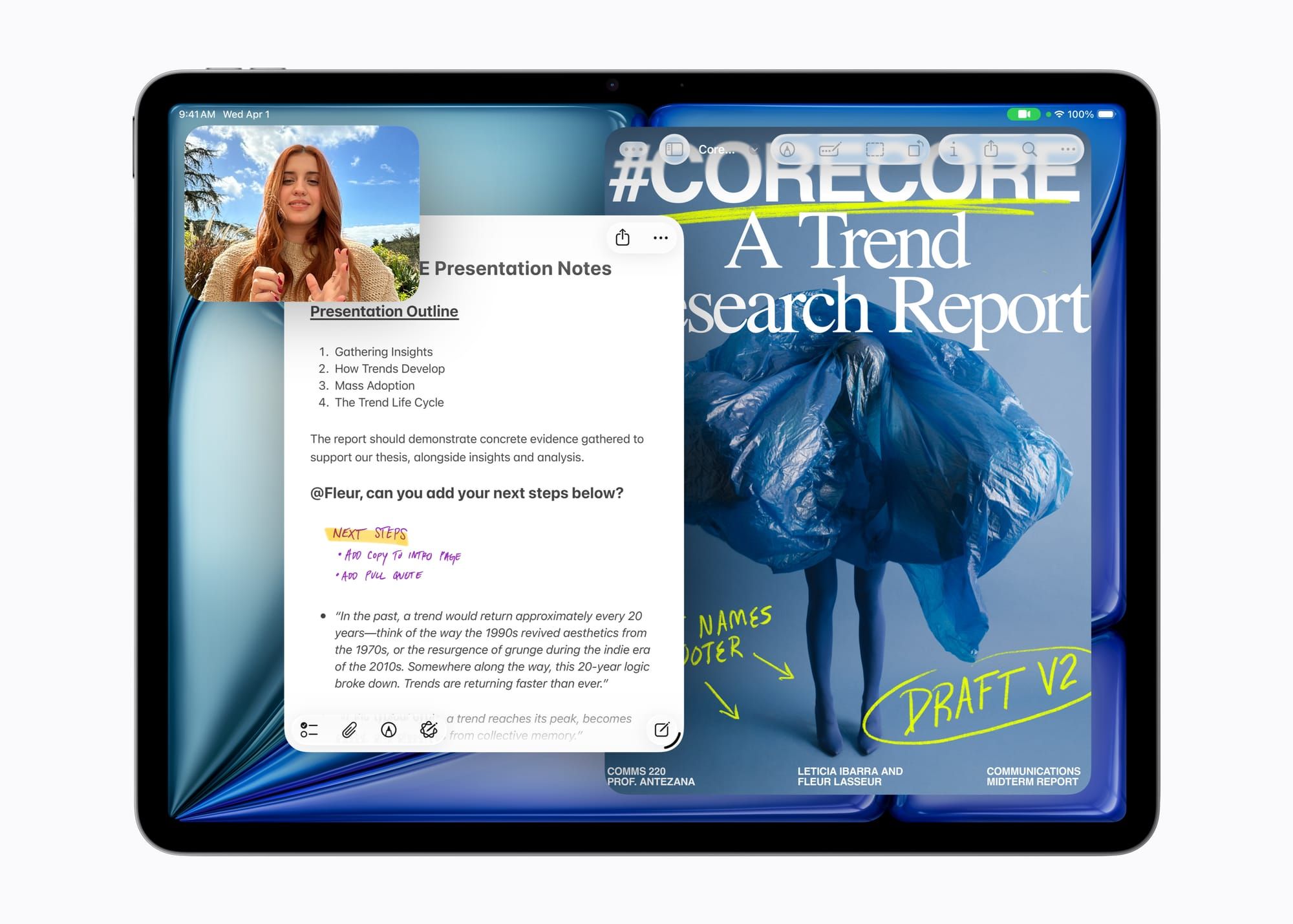
The iPad Air M4 starts at $599 for the 11-inch and $799 for the 13-inch, and both run the exact same Apple M4 chip with 12 gigabytes of unified memory. So the core question is simple: how much screen do you actually need? But the answer isn’t as straightforward as “bigger is better” — because Apple quietly gave the 13-inch model a brighter display, and that single spec changes the math for anyone who works outdoors, in bright rooms, or near windows.
I’ll walk you through every meaningful difference between these two sizes so you can pick the one that actually fits your life — not just the one that looks impressive in the store.
 Ad
AdThe Stuff That’s Identical (and It’s a Lot)
Before we get into what’s different, let’s clear up what’s not. Both the 11-inch and 13-inch iPad Air M4 share the same Apple M4 chip with an 8-core CPU, 9-core GPU, and 16-core Neural Engine. Both have 12 gigabytes of RAM. Both run iPadOS 26 with full Apple Intelligence support. Both offer the same storage tiers — 128 gigabytes, 256 gigabytes, 512 gigabytes, and 1 terabyte. Both have a landscape 12-megapixel Center Stage front camera and a 12-megapixel wide rear camera. Both support Apple Pencil Pro with hover detection, Wi-Fi 7 via the new N1 wireless chip, Bluetooth 6, Thread networking, and USB-C with 10-gigabit-per-second transfer speeds.
Same colors. Same Touch ID power button. Same accessory support for the Magic Keyboard. If you close your eyes and tap through iPadOS, you literally cannot tell which size you’re holding. The experience is identical from a software and performance standpoint.
Where the 11-Inch Wins
Portability. That’s the short answer, and it’s not a small thing.
The 11-inch iPad Air weighs 1.02 pounds — roughly a third of a pound lighter than the 13-inch at 1.36 pounds. That difference disappears on a desk but screams at you on a cross-country flight when you’ve been holding the thing for three hours. The 11-inch also slides into bags and backpacks without the “will it fit?” anxiety that the 13-inch occasionally introduces with smaller messenger bags.
And then there’s price. The 11-inch starts at $599. The 13-inch starts at $799. That’s a $200 gap at every storage tier, and it never closes. If you’re adding cellular connectivity — $150 more on either size — the 13-inch cellular with 256 gigabytes of storage runs $1,149, which puts it uncomfortably close to iPad Pro territory. At that point, you’d want to read how the iPad Air M4 and iPad Pro M5 actually compare before committing.
For reading, casual sketching, note-taking in class, or FaceTime calls propped on a kitchen counter, the 11-inch is the better everyday companion. It’s the iPad you grab without thinking about it.
Where the 13-Inch Pulls Ahead
Screen real estate and — here’s the part Apple barely advertises — brightness.
The 13-inch iPad Air pushes 600 nits of peak brightness. The 11-inch tops out at 500 nits. That 100-nit gap might sound like marketing noise until you take the iPad to a patio, a park bench, or a window-side desk at your favorite coffee shop. In direct or ambient light, the 13-inch display stays readable noticeably longer before you start squinting and cranking the brightness slider. I think this is the most underrated difference between the two models, and Apple buries it in the spec sheet without any fanfare.
The physical canvas also transforms multitasking. Split View on the 11-inch works, technically, but both apps feel cramped — especially when one side is Safari and the other is Notes. On the 13-inch, Split View actually breathes. Two apps sit side by side with enough room to read full paragraphs and type without constantly scrolling. If your iPad replaces a laptop for any real work, the 13-inch earns its keep fast.
The bigger display also makes the iPad a genuinely better drawing surface for Apple Pencil Pro users. The difference between sketching on an 11-inch screen and a 13-inch screen is the difference between a notebook and a sketchpad. If you use Procreate, Affinity Designer 2, or even just markup tools in iPadOS 26, the extra two inches of diagonal change how your hand moves across the glass.
 Ad
AdAt-A-Glance: 11-Inch vs 13-Inch iPad Air M4
Both sizes run the same Apple M4 chip with 12 GB RAM, Wi-Fi 7, Bluetooth 6, and identical camera systems. Here is how the differences break down.
| Feature | 11-Inch iPad Air M4 | 13-Inch iPad Air M4 |
|---|---|---|
| Starting price | $599 | $799 |
| Weight (Wi-Fi) | 1.02 lbs (464 g) | 1.36 lbs (617 g) |
| Display brightness | 500 nits | 600 nits |
| Resolution | 2360 × 1640 | 2732 × 2048 |
| Battery capacity | 28.93 Wh | 36.59 Wh |
| Rated battery life | Up to 10 hrs | Up to 10 hrs |
| Best for | Portability, reading, one-app use | Multitasking, creative work, desk use |
The Accessories Factor
Here’s something easy to overlook: the Magic Keyboard for the 13-inch iPad Air costs $349. The 11-inch version costs $299. These are already expensive accessories, and the 13-inch keyboard is physically larger and heavier, which partially cancels out the bigger screen’s benefits if portability matters to you.
The Apple Pencil Pro works identically with both sizes — same hover, same barrel roll, same squeeze gesture. If you’re looking for help pairing or charging any Apple Pencil generation, this guide covers every model.
One edge case worth mentioning: if you plan to use the iPad Air as a secondary display for your Mac via Sidecar, the 13-inch gives you a usable extended desktop. The 11-inch works as a Sidecar display, but palettes and toolbars eat so much of the screen that the usable drawing or reference area feels tight. I’d call the 13-inch the minimum viable Sidecar size.
The Battery Tells a Quiet Story
Both iPads are rated for 10 hours of web browsing or video playback on Wi-Fi. Identical claim, identical headline. But the 13-inch packs a 36.59-watt-hour battery versus the 11-inch’s 28.93-watt-hour cell. Apple needs that extra capacity to feed a bigger, brighter screen — so in practice, don’t expect the 13-inch to outlast the 11-inch just because the battery is physically larger. They reach roughly the same finish line from different starting points.
Where it matters: if you’re pushing both displays at maximum brightness, the 13-inch has more energy reserves to burn. The 11-inch at max brightness drains faster because it’s pulling harder from a smaller battery to light a panel that’s already dimmer to begin with. For everyday auto-brightness use, though, you probably won’t notice a meaningful difference. Apple lists the full technical specifications for both models on its iPad Air specs page for anyone who wants the complete numbers.

Related Posts
Your iPad Moves Files Six Ways and You're Probably Using One
Apr 08, 2026
Your iPad’s Magic Keyboard Has a Shortcut Layer Most Owners Never Open
Apr 07, 2026
Your Apple Pencil Tip Is Wearing Out and You Can’t Even Tell
Apr 06, 2026