
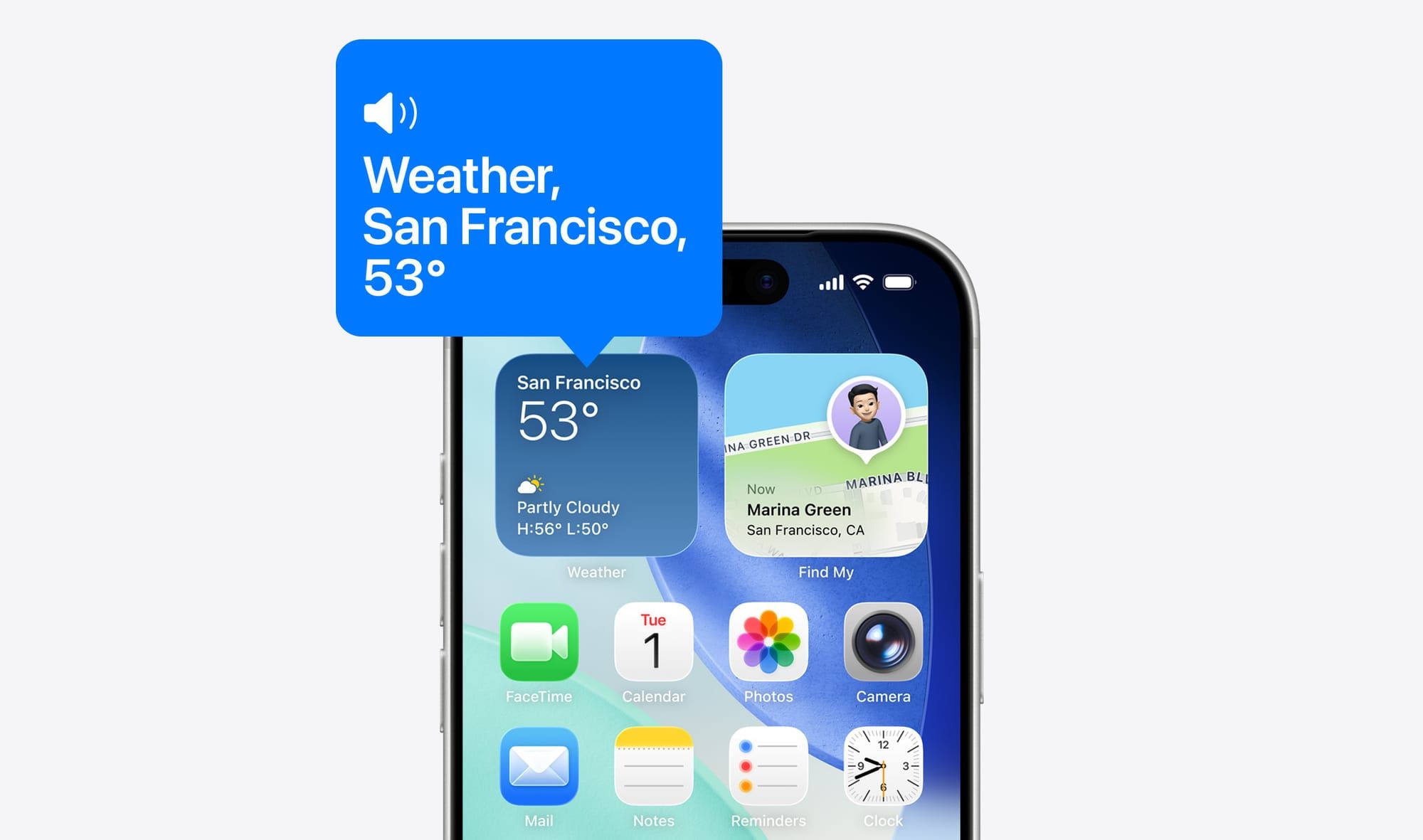

🎧 Listen to this article
Prefer to listen? An audio version of this article is available for accessibility and convenience.
Your iPhone's Weather app has an alert system that goes well beyond standard government emergency broadcasts. It's called Enhanced Alerts, and it sends earlier, more location-specific notifications for severe weather, flash flooding, air quality drops, and winter precipitation events — well before the broad national alert system would trigger. The catch is that Enhanced Alerts are turned off by default, and the toggle to enable them is not where most people would think to look.
It's not under Settings, then Notifications. It's not under a Weather listing in the main Settings app. You reach it through the Weather app itself, tucked inside a settings panel most people scroll right past the first time they open the app. A lot of iPhones running iOS 26.4 have this capability sitting completely dormant — not because the feature is hard to find in any complicated technical sense, but because Apple never surfaced it during setup.
 Ad
AdWhat Enhanced Alerts Actually Add
Most iPhone users know the government emergency alerts — the loud ones that interrupt sleep at 2 a.m. for Amber Alerts or flash flood emergencies. Those broadcast through carrier infrastructure and cover wide geographic areas. The Weather app's standard severe weather notifications tap the same National Weather Service feed for watches and warnings. That system works, but it casts a wide net. A severe thunderstorm watch for your county might span 500 square miles with more than a dozen different microclimates inside it.
Enhanced Alerts operate differently. Apple's on-device weather modeling — the same system behind the Weather app's hyperlocal hourly precipitation charts — tracks your GPS position and calculates when a weather event is on a direct path toward your exact location. The categories include Severe Thunderstorm, Flash Flood, Winter Precipitation, Air Quality, and Heat or UV Index warnings. Winter Precipitation distinguishes between rain, sleet, and snow rather than treating them as a single event type. These are not broadcast notifications. They're calculated for where you are standing, and they fire earlier — sometimes significantly earlier — than the NWS-triggered alternative.
How to Enable Enhanced Alerts
To turn them on, open the Weather app. In the bottom-right corner of the weather display, tap the list icon to open your saved locations. In that view, look for the settings gear icon in the lower-left corner and tap it. Inside the Weather settings panel, you'll find a Notifications section. Tap it. Enhanced Alerts is the section below the basic Weather Notifications toggle, and each alert category has its own individual switch.
That path — Weather app, settings gear, Notifications, Enhanced Alerts — is genuinely non-obvious, which is why a lot of people miss it. Every other iOS notification setting lives in Settings, then Notifications. Weather's basic notification preferences are there too, but Enhanced Alerts are separate from that, living inside the app's own settings panel. It's the kind of thing Apple's design documentation would call contextual. Real people call it confusing.
The individual toggles are worth paying attention to. You can turn on Severe Thunderstorm and Flash Flood without enabling Air Quality or UV Index. That granularity is better than most Apple first-party apps offer — instead of an all-or-nothing notification toggle, you get per-category control. Take a couple of minutes to decide which alerts are genuinely relevant to where you live and work.
 Ad
AdThe Location Permission That Trips Everyone Up
Here is where a lot of people enable Enhanced Alerts and then wonder why nothing ever arrives. Enhanced Alerts require the Weather app to have Always location access — not While Using the App. When location is set to While Using, the Weather app can only check your position when it's open and active in the foreground. An alert calculated for your position while your phone is in your pocket simply never fires.
To verify this, go to Settings, then Privacy and Security, then Location Services, scroll to Weather, and confirm the setting reads Always. While you're in that same screen, make sure Precise Location is also enabled. Approximate location rounds to a general area, which defeats the purpose of Enhanced Alerts entirely. You want the system tracking your actual GPS coordinates, not a two-mile radius centered somewhere near your neighborhood.
One thing almost nobody mentions: Enhanced Alerts also fire for saved cities in your Weather app locations list. If you have family in a region prone to tornadoes, or a vacation property on a coast that sees hurricanes, adding that city to your saved locations means you'll receive Enhanced Alerts for weather heading toward that location as well. It's not documented anywhere prominently — it's just how the system works. That makes Enhanced Alerts considerably more useful for anyone who tracks weather in multiple places.
Which Alerts Are Worth Enabling
Not every category deserves to be on. Air Quality Alerts are the ones most likely to become noise. In regions regularly affected by wildfire smoke or summer ozone conditions, the alerts fire frequently enough that you start dismissing them on reflex — and that's the worst habit you can build with a notification system. If air quality problems are occasional where you live, enable it. If they're seasonal and persistent, leave it off and check the Air Quality map inside the Weather app manually.
Severe Thunderstorm and Flash Flood should be on for everyone, no exceptions. The early-warning advantage here is real. A standard NWS severe thunderstorm watch can remain active for six or more hours over a large area. Apple's Enhanced Alert fires a more targeted notification as a storm cell moves toward your position — which is a genuinely different kind of useful when you are deciding whether to head inside, move a car, or stay at an outdoor event.
Live Activities can also complement Enhanced Alerts well, keeping weather conditions visible as a persistent status at the top of your lock screen without requiring you to open the app. And if you have not yet reviewed everything else iOS 26.4 changed, a walkthrough of the settings worth changing right now covers the rest of the update's quieter improvements.
Accessibility and Clarity
Enhanced Alerts have real value for users with hearing impairments. Someone who cannot hear outdoor warning sirens or emergency broadcast tones depends entirely on visual and haptic phone notifications during severe weather. iOS 26.4's Enhanced Alerts work alongside Settings, then Accessibility, then Audio and Visual, then LED Flash for Alerts — which flashes your iPhone's camera LED as a visible indicator when any notification arrives. Combining Enhanced Alerts with LED Flash creates a severe weather warning system that does not require audio, a detail Apple has not emphasized but that matters significantly for deaf and hard-of-hearing iPhone users.
If you use VoiceOver, the notification content from Enhanced Alerts is fully readable and includes the alert category, severity level, and your location name — enough detail to understand what's happening without opening the Weather app.
Quick-Action Checklist
Enabling Enhanced Alerts on iPhone in iOS 26.4:
- Open Weather app — tap the list icon in the lower right — tap the gear icon in the lower left
- Tap Notifications, then Enhanced Alerts
- Enable Severe Thunderstorm and Flash Flood (recommended for everyone)
- Enable Winter Precipitation if relevant to your region
- Consider leaving Air Quality off unless weather-related air quality issues are occasional in your area
- Go to Settings, then Privacy and Security, then Location Services, then Weather — set to Always
- Confirm Precise Location is toggled on
- Add any secondary cities to your Weather saved locations list to receive Enhanced Alerts for those areas too

Related Posts
iOS 26.4 Added Serious Weather Alert Upgrades to Your iPhone. Here’s Where to Find Them.
Apr 17, 2026
iOS 26.4 Dropped Ambient Music Widgets, and They’re Worth Setting Up
Apr 16, 2026
This iOS 26.4 Setting Lets Your iPhone Shazam Songs Offline
Apr 16, 2026