
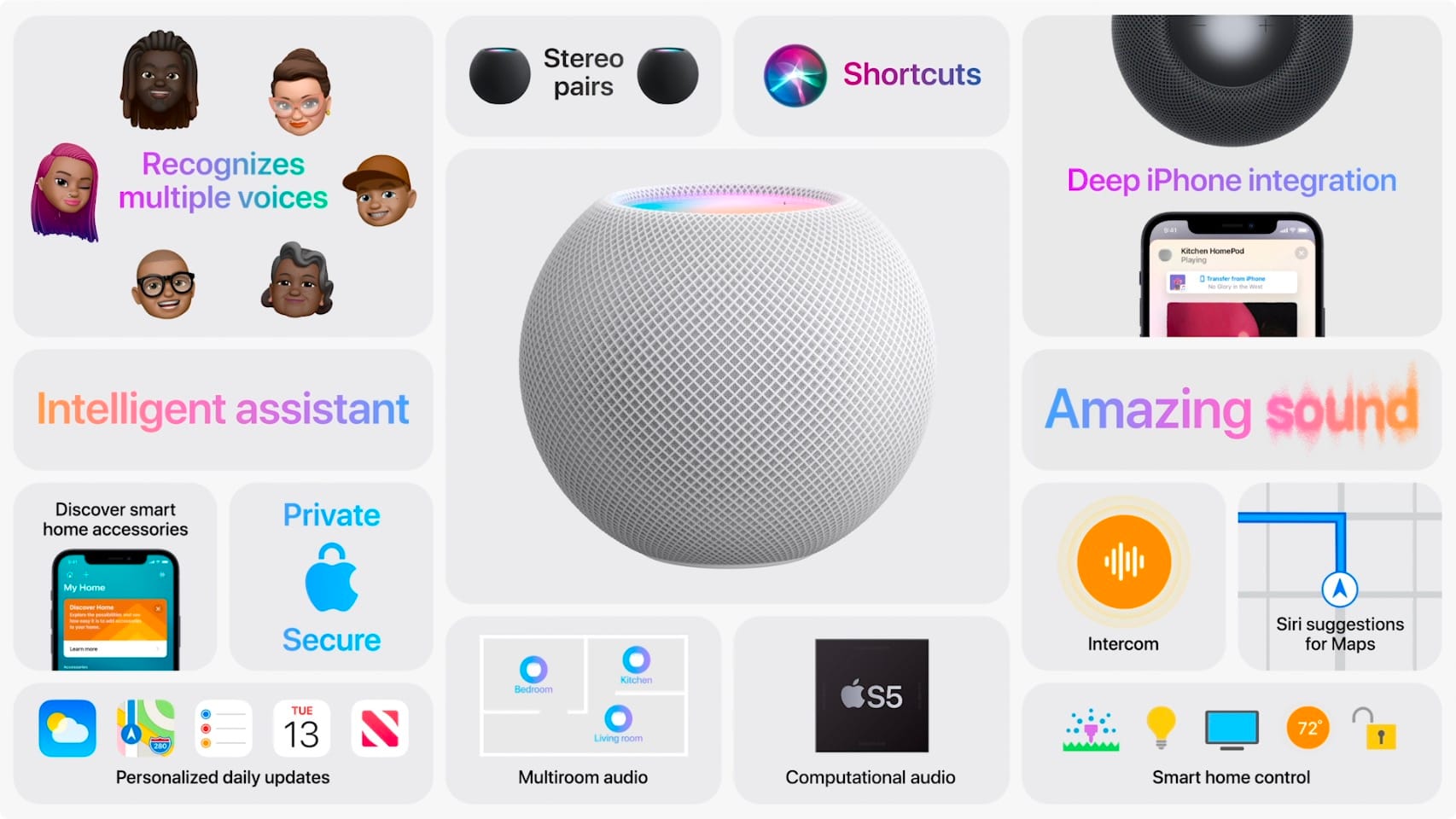

Apple HomePod is the better smart speaker for anyone already living inside the Apple ecosystem. It sounds significantly better than any Amazon Echo at the same price, it doubles as a Thread-capable HomeKit and Matter smart home hub, and it processes Siri requests locally without storing your voice recordings on a remote server. But Siri, as of February 2026, is still running its pre-LLM engine on HomePod while Amazon has already shipped Alexa+ to every Prime member in the country.
That gap matters more than you might expect. If you have ever tried to ask Siri to do two things in a row without repeating "Hey Siri" each time, you already know the frustration. Alexa+ holds a conversation. Siri still waits for a wake word between every command. For a device that sits in your kitchen or living room fielding dozens of requests a day, that friction adds up fast.
So the real question is not which speaker sounds better on paper. It is whether HomePod's audio and privacy advantages outweigh the fact that Alexa is, right now, a smarter assistant. I have spent weeks comparing both ecosystems side by side, and the answer depends almost entirely on what you actually use a smart speaker for.
 Ad
AdWhat HomePod Gets Right That Echo Cannot Match
Start with sound. The full-size HomePod packs a four-inch high-excursion woofer and an array of five horn-loaded tweeters, each with its own neodymium magnet. Apple's computational audio engine uses an internal microphone to sense the room around it and adjust bass response in real time. Set a HomePod on a bookshelf against a wall and it recalibrates. Move it to the center of a counter and it recalibrates again. The Echo Studio does room adaptation too, but the HomePod's tuning happens faster and produces noticeably tighter low-end response in small to mid-sized rooms.
Privacy is the other headliner. Every Siri interaction on HomePod is processed locally whenever possible. Apple does not store voice recordings tied to your identity. Amazon has improved its privacy controls over the past two years, but Alexa still defaults to cloud processing and requires you to manually opt out of voice history retention. If privacy is a hard line for your household, HomePod wins this category without a contest.
Then there is the hub functionality. Both the HomePod and HomePod mini serve as HomeKit and Matter smart home hubs with built-in Thread border router support. That means Thread-enabled accessories like door sensors, smart plugs, and light switches connect directly to HomePod without a separate bridge. If you are building a HomeKit smart home from scratch, HomePod is doing double duty as your audio system and your smart home backbone.
One edge case worth noting: the HomePod's touch surface on top responds to taps for play, pause, and volume. But the tap targets feel imprecise when you are reaching up to a shelf. A light tap sometimes registers as a press-and-hold, which summons Siri instead of pausing your music. It is a small thing, but it happens often enough that most people end up using voice commands or their iPhone instead of the touch controls.
Where Alexa Pulls Ahead in 2026
Alexa+ is the elephant in the room. Amazon shipped its LLM-powered assistant to all U.S. Prime members in January 2026, free of charge. Non-Prime users pay $19.99 per month. The difference between Alexa+ and the old Alexa is dramatic. You can carry on multi-turn conversations without repeating the wake word. Alexa+ remembers family names, learns your routines, and can complete complex multi-step tasks like booking a restaurant and adding it to your calendar in a single exchange.
Siri on HomePod is not there yet. Apple has been developing an LLM-powered Siri under the Apple Intelligence umbrella, but as of February 2026 it has not shipped to HomePod. The current Siri handles timers, music playback, and HomeKit commands well enough, but anything requiring context, follow-up questions, or nuanced understanding falls flat. Ask Siri to "turn off all the lights except the bedroom" and you will get mixed results. Ask Alexa+ the same thing and it just works.
Device compatibility is the other gap. Alexa talks to an enormous catalog of smart home devices over Zigbee, Wi-Fi, Bluetooth, Matter, and Thread. HomeKit's catalog is smaller. Matter is closing this gap steadily, and new Matter-certified devices work with both ecosystems out of the box. But if you already own Zigbee accessories or older Wi-Fi smart plugs, Alexa connects to them natively where HomeKit cannot.
 Ad
AdThe Audio Comparison Nobody Makes Honestly
Most comparison articles pit the HomePod mini against the Echo Dot. That is not a fair fight and it is not a useful one either. The HomePod mini costs $99 and is a single-driver speaker designed for small rooms. The Echo Dot Max costs $99.99 and actually packs a two-way speaker system with a 2.5-inch woofer. For pure sound per dollar at that price, the Echo Dot Max is competitive.
The real comparison is HomePod ($299) against Echo Studio ($219.99). And here, HomePod wins. The five-tweeter array delivers a wider, more enveloping soundstage that fills a room more evenly. The Echo Studio's redesigned 2025 model is 40 percent smaller than the original and sounds tighter, but it still leans heavier on direct projection where HomePod fills the space around you. For Apple Music subscribers, HomePod handles Dolby Atmos spatial audio natively without any configuration. Both speakers support Atmos, but Apple's implementation with Apple Music is seamless in a way that Alexa's music routing is not.
If you want multi-room audio, building a whole-home audio system with HomePod using AirPlay 2 is straightforward and sounds excellent. AirPlay 2 also works with Sonos, Bose, Bang & Olufsen, and dozens of third-party speakers, giving you more flexibility than Amazon's proprietary multi-room grouping. Alexa's multi-room works fine within the Echo lineup, but the third-party speaker support is narrower than AirPlay 2's reach.
HomePod vs Alexa at a Glance
At-A-Glance comparison: HomePod vs Alexa across the four categories that matter most for an Apple household.
| Category | Apple HomePod | Amazon Echo (Alexa) |
|---|---|---|
| Audio Quality | Computational audio with room sensing, Dolby Atmos, five tweeters + woofer | Echo Studio has Dolby Atmos; Echo Dot and standard Echo are mid-range |
| Voice Assistant | Siri (pre-LLM version as of February 2026) | Alexa+ (LLM-powered, shipped January 2026, free for Prime members) |
| Privacy | End-to-end encryption, local processing, no stored voice recordings | Cloud processing, opt-out voice recording deletion, improving but cloud-first |
| Device Ecosystem | HomeKit + Matter; smaller catalog but growing; deep Apple integration | Zigbee + Matter + Thread + Wi-Fi; largest device catalog by far |
The table tells a clear story. HomePod leads on audio and privacy. Alexa leads on assistant intelligence and device breadth. Neither speaker is categorically better. The right choice depends on which of those four columns matters most to your household.
Who Should Buy a HomePod Right Now
HomePod is the right pick if you primarily want a great-sounding speaker that also controls your Apple smart home. If your household runs on iPhones, you use Apple Music, and you value local voice processing over assistant versatility, HomePod is a better product than anything Amazon sells. The Handoff feature lets you bring a phone call or a podcast from your iPhone to HomePod by holding your phone near the speaker. That tap-to-transfer interaction feels effortless in a way that Alexa's Bluetooth pairing cannot replicate.
Families with kids will appreciate the Intercom feature that turns every HomePod and HomePod mini in the house into a two-way communication system. Press and hold the Home button on your iPhone, speak a message, and it plays on every HomePod or just the one in a specific room. It replaces shouting down hallways with something that actually works. Alexa has Drop In and Announce features that accomplish similar things, but the integration with iPhone and Apple Watch makes Intercom feel less like a feature and more like a natural part of how the house operates.
If your HomePod ever stops cooperating, a factory reset is straightforward. Our guide on resetting any HomePod to factory settings walks through every method, including the physical button reset when Siri is unresponsive.
Who Should Pick Alexa Instead
Alexa is the better choice if you need a smart assistant that actually assists. Alexa+ runs circles around Siri for conversational commands, multi-step tasks, and third-party integrations. If you order from Amazon frequently, manage a mixed smart home with non-Apple devices, or want a voice assistant that can handle real complexity, Alexa earns that spot on your counter.
The Echo Show line also gives Alexa an advantage Apple does not have yet. The Echo Show 8 ($179.99) and Echo Show 11 ($219.99) put a touchscreen on your kitchen counter for recipes, video calls, and camera feeds. Apple is reportedly working on a similar product, but as of February 2026 nothing with a screen has shipped. If you want visual feedback from your smart speaker, Alexa is the only option today.
One honest warning: Alexa's ecosystem is larger, but it is also noisier. Amazon pushes product suggestions, deal alerts, and "By the way" tips that interrupt your requests. You can disable most of these in the Alexa app settings, but the out-of-box experience includes more commercial nudges than HomePod's. Apple does not sell advertising through Siri. That distinction is subtle but noticeable after a week of living with both speakers.
What Apple Intelligence Could Change Later This Year
Apple's LLM-powered Siri is expected to arrive on HomePod later in 2026, likely alongside an iOS 26.5 or iOS 27 update. When it ships, HomePod's biggest weakness disappears. Conversational Siri with context awareness, multi-turn dialogue, and deeper app integration would close the assistant gap with Alexa+ almost entirely. According to Apple's own HomePod technical specifications, the second-generation HomePod runs an S7 chip that should have enough processing headroom for on-device LLM inference, especially with Apple's neural engine.
I would not buy a HomePod today banking on features Apple has not shipped yet. That is a recipe for disappointment. But if the current HomePod already does what you need, the LLM Siri upgrade will be a free bonus rather than a requirement. Buy for what the speaker does now, not for what Apple promises later.
For most Apple households, HomePod is the smarter buy. The sound quality justifies the price on its own, the privacy model is genuine rather than performative, and the HomeKit hub functionality means you are not buying a single-purpose device. Alexa+ is a more capable assistant today, no question. But smart speakers outlast assistant updates. The HomePod you buy this week will still sound excellent and still anchor your Apple smart home long after Siri catches up.

Related Posts
Apple TV+ Has Five Premieres This Month and Your Watchlist Needs All of Them
Mar 04, 2026
Every Apple HomeKit Device That Earns a Spot in Your Smart Home
Mar 03, 2026
Your HomePod Joins the Wrong Wi-Fi Network Until You Fix This One Setting
Mar 03, 2026