

The Mac Studio with Apple Silicon M3 Ultra used to offer 512GB of unified memory for $4,000. As of this week, that option is gone. Apple removed the configuration from its online store without announcement, without explanation, and without a replacement ready to ship.
That leaves the maximum at 256GB, and even that configuration now costs $2,000 (up from $1,600) with shipping delays stretching into May. The real question for anyone running large language models, compositing 8K timelines, or building local AI workflows is whether the upcoming Apple Silicon M5 Max and M5 Ultra Mac Studio will restore what Apple just took away, or whether the 512GB ceiling is gone for good.
I want to be straightforward about this: if you were planning to order a 512GB Mac Studio for AI inference or heavy post-production work, your window closed. And the timing could not be worse, because Apple's own M5 Max benchmarks show a chip that is clearly designed for exactly those workloads.
 Ad
AdWhat Apple Actually Removed (and Why DRAM Is the Culprit)
When Apple launched the M3 Ultra Mac Studio in early 2025, the company made a point of highlighting the 512GB configuration. Apple's own press materials said the machine could "run large language models with over 600 billion parameters entirely in memory." That was the pitch. The idea that four Mac Studios clustered together could replace server racks full of Nvidia hardware was not subtle marketing, it was the core value proposition for a specific and growing buyer.
Now that pitch has a gap in it. The 512GB tier vanished from the Apple online store during the first week of March 2026. No press release, no support document. According to reporting from MacRumors and 9to5Mac, the removal stems from a global DRAM shortage that has sent memory prices climbing and supply plummeting. AI data centers are consuming enormous quantities of high-capacity memory modules, the same kind that went into the 512GB Mac Studio, and consumer machines are losing out.
The 256GB upgrade path is still available, but it got more expensive. The jump from 96GB to 256GB on the M3 Ultra used to cost $1,600. It now costs $2,000, a $400 increase that Apple also made without fanfare. Customers ordering the 256GB configuration face delivery estimates stretching into May 2026. That is a two-month wait for a machine that already shipped within days a few months ago.
The M5 Max Benchmarks Tell a Bigger Story
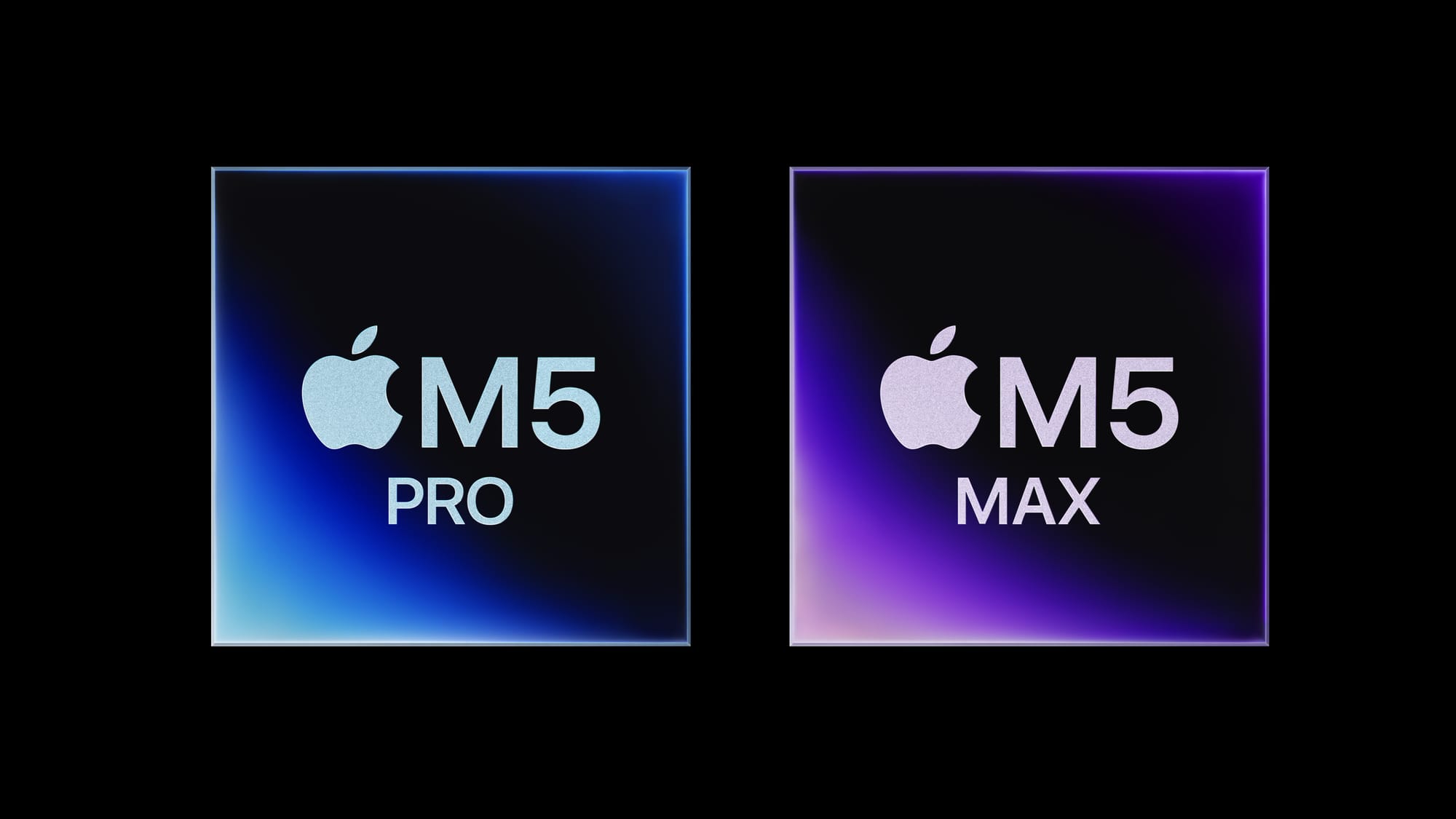
While Apple was quietly pulling 512GB configurations, the company was simultaneously announcing the Apple Silicon M5 Pro and M5 Max chips in the new MacBook Pro, with availability starting March 11, 2026. The M5 Max is a different animal from its predecessor. It uses Apple's Fusion Architecture, a dual-die design built on TSMC's third-generation 3-nanometer process (N3P), where the CPU and GPU sit on separate silicon blocks connected through an advanced SoIC packaging layer.
The numbers from early Geekbench 6 results are hard to ignore. The 18-core M5 Max posted a single-core score of 4,268 and a multi-core score of 29,233. That multi-core number beats the M3 Ultra's 27,726, a chip with 32 CPU cores. An 18-core laptop chip outperforming a 32-core desktop chip is not an incremental improvement. The GPU side tells a similar story: a Metal score of 232,718 represents roughly 20 percent more GPU throughput than the M4 Max.
Here is where the Mac Studio conversation gets interesting. The M5 Max is currently shipping only in MacBook Pro configurations with up to 128GB of unified memory and up to 614GB/s bandwidth. When that same chip arrives in the Mac Studio's thermal envelope, with better sustained cooling and potentially higher power delivery, those benchmark numbers could climb further. If you have been eyeing a Mac Studio for creative work, the performance jump from the current M4 Max model to an M5 Max version would be substantial. Zone of Mac's guide to choosing the right Mac Studio for your creative workflow covers the current lineup in detail.
 Ad
AdThe M5 Ultra Question Nobody Can Answer Yet
The M5 Ultra chip has been identified in iOS 26.3 release candidate code, and Bloomberg's Mark Gurman has placed both M5 Max and M5 Ultra Mac Studio models on Apple's 2026 schedule, expected between March and June. The Ultra variant has historically doubled the Max's core counts by fusing two Max dies together. If that pattern holds, the M5 Ultra could feature a 36-core CPU, up to 80 GPU cores, a 32-core Neural Engine, and potentially over 1,200GB/s of memory bandwidth.
But the RAM ceiling is the elephant in the room. The M3 Ultra supported up to 512GB. With the current DRAM shortage showing no signs of easing, and Apple already raising prices on the 256GB tier, there is real uncertainty about whether the M5 Ultra will launch with 512GB as an option. The shortage is being driven by AI accelerator demand from Nvidia, AMD, and every hyperscaler building out inference capacity. Consumer desktop machines, even expensive ones like the Mac Studio, sit lower on the allocation priority list than data center GPUs.
For professionals who need to run models with hundreds of billions of parameters locally, or compositors working with massive uncompressed footage, this is not an abstract supply chain story. It directly determines whether the Mac Studio remains a viable alternative to building a dedicated Linux inference box. Our breakdown of how the Mac Studio compares to Nvidia's DGX Spark for AI workloads covers the trade-offs between these two approaches.
What Your Buying Decision Looks Like Right Now
This is a genuinely frustrating moment to be shopping for a Mac Studio. The M4 Max model starts at $1,999 with 36GB of unified memory and a 512GB SSD, and it remains an excellent machine for video editing, 3D rendering, and software development. The M3 Ultra starts at $3,999 with 96GB and a 1TB SSD, and it is still the most powerful Mac you can buy today. But the M5 versions are clearly imminent, and buying a current-generation Mac Studio in March 2026 means paying full price for hardware that could be superseded within weeks.
I think the honest advice is this: if you need a Mac Studio today for production work that cannot wait, the M4 Max with 128GB is the configuration that makes the most sense. It gives you enough unified memory for most professional workflows, the Thunderbolt 5 connectivity on all four rear ports, and it avoids the M3 Ultra's inflated 256GB upgrade pricing and shipping delays. But if you can wait, wait. The M5 Max Mac Studio should bring a meaningful CPU and GPU performance bump in the same $1,999 starting chassis.
The Ports and Connectivity You Already Get
One detail worth noting: the Mac Studio's physical design and port layout are not expected to change with the M5 update. The current model packs four Thunderbolt 5 ports on the rear (each supporting up to 120Gb/s), two USB-A ports at 5Gb/s, one HDMI 2.1 port, 10Gb Ethernet, a 3.5mm headphone jack, and an SDXC card slot. The front panel on the M4 Max model has two USB-C ports at 10Gb/s, while the M3 Ultra gives you two additional Thunderbolt 5 ports up front. That distinction matters if you are frequently connecting fast external storage to the front of the machine.
The whole package fits in a 3.7-inch tall, 7.7-inch square aluminum enclosure. It is a dense little box. The M4 Max version weighs 6.1 pounds and the M3 Ultra weighs 8.0 pounds, and when you pick one up, the weight tells you immediately that Apple packed the thermal solution tight. There is no wasted space inside. That density is part of why the Mac Studio delivers workstation-class performance in a form factor that sits under a monitor arm without complaint.
Should You Wait for the M5 Mac Studio?
Yes, if you can. The M5 Max chip is already posting benchmark numbers that beat the current M3 Ultra in multi-core CPU performance with half the core count. When those 18 cores land inside the Mac Studio's superior thermal design, with sustained power delivery instead of a laptop battery, the performance ceiling goes up. And the M5 Ultra, whenever it arrives, should push that ceiling dramatically higher.
The gamble is on RAM. If the DRAM shortage persists and Apple cannot offer 512GB on the M5 Ultra, then a significant portion of the Mac Studio's AI and scientific computing audience will be left without a suitable machine. No amount of CPU or GPU performance compensates for running out of memory when your model requires 400GB of parameter space. Apple knows this. Whether they can solve it with the current supply chain is a question that nobody outside Cupertino can answer right now.
The Mac Studio remains the most capable compact desktop Apple makes. The M5 update will make it faster. Whether it makes it bigger, in the memory dimension that matters most, is the decision point worth tracking over the next few months.

Related Posts
Your Mac Just Started Warning You About Apps That Will Stop Working
Mar 28, 2026
MacBook Pro M5 Pro vs M4 Pro: The Honest Buying Decision for 2026
Mar 26, 2026
Claude Can Work Your Mac While You Walk Away — Here’s What That Changes
Mar 26, 2026