

🎧 Listen to this article
Prefer to listen? An audio version of this article is available for accessibility and convenience.
Apple Home controls your lights, locks, thermostats, cameras, and window blinds from your iPhone. Ask it to protect you from a house fire, though, and the options are almost nonexistent. First Alert discontinued every Onelink model with HomeKit support. Eve Smoke never crossed the Atlantic. The entire HomeKit smoke detector category quietly collapsed while Apple focused on flashier accessories.
That does not mean your Apple Home has to be completely blind to fire. HomePod includes a built-in Sound Recognition feature that listens for the alarm pattern of your existing smoke and CO detectors, then fires Critical notifications to every Apple device in your household. And a couple of new Matter-over-Thread detectors are finally entering the market, though the word “couple” is doing heavy lifting here.
 Ad
AdWhat Happened to Every HomeKit Smoke Detector
Short answer? First Alert killed them. The Onelink Wi-Fi Smoke & CO Alarm was the go-to HomeKit smoke detector for years. Battery model, hardwired model, even the Safe & Sound with its built-in AirPlay 2 speaker. All discontinued. First Alert’s own support page stamps the word across every Onelink product listing, and they never publicly explained the decision.
For US buyers, this creates a real problem. The European market still has Eve Smoke and Netatmo’s Smart Smoke Alarm, both with native HomeKit support. Neither carries US safety certification. You cannot legally install a smoke detector in most US jurisdictions without UL or ETL listing, full stop. Think about it. One of the most critical safety devices in your home, and Apple’s entire accessory ecosystem basically shrugs.
Your Actual Options Right Now
Only one US-certified, natively HomeKit-compatible smoke and carbon monoxide detector still exists: the Owl Wired. It packs six sensors into one unit — smoke, CO, motion, sound, temperature, and humidity — and connects through Wi-Fi with full HomeKit support. It costs $189 and meets UL-268 standards. The catch? Sold out. Pre-orders ship April 2026. The entire US HomeKit smoke detector market is literally a single product from a startup, and you cannot buy it today.
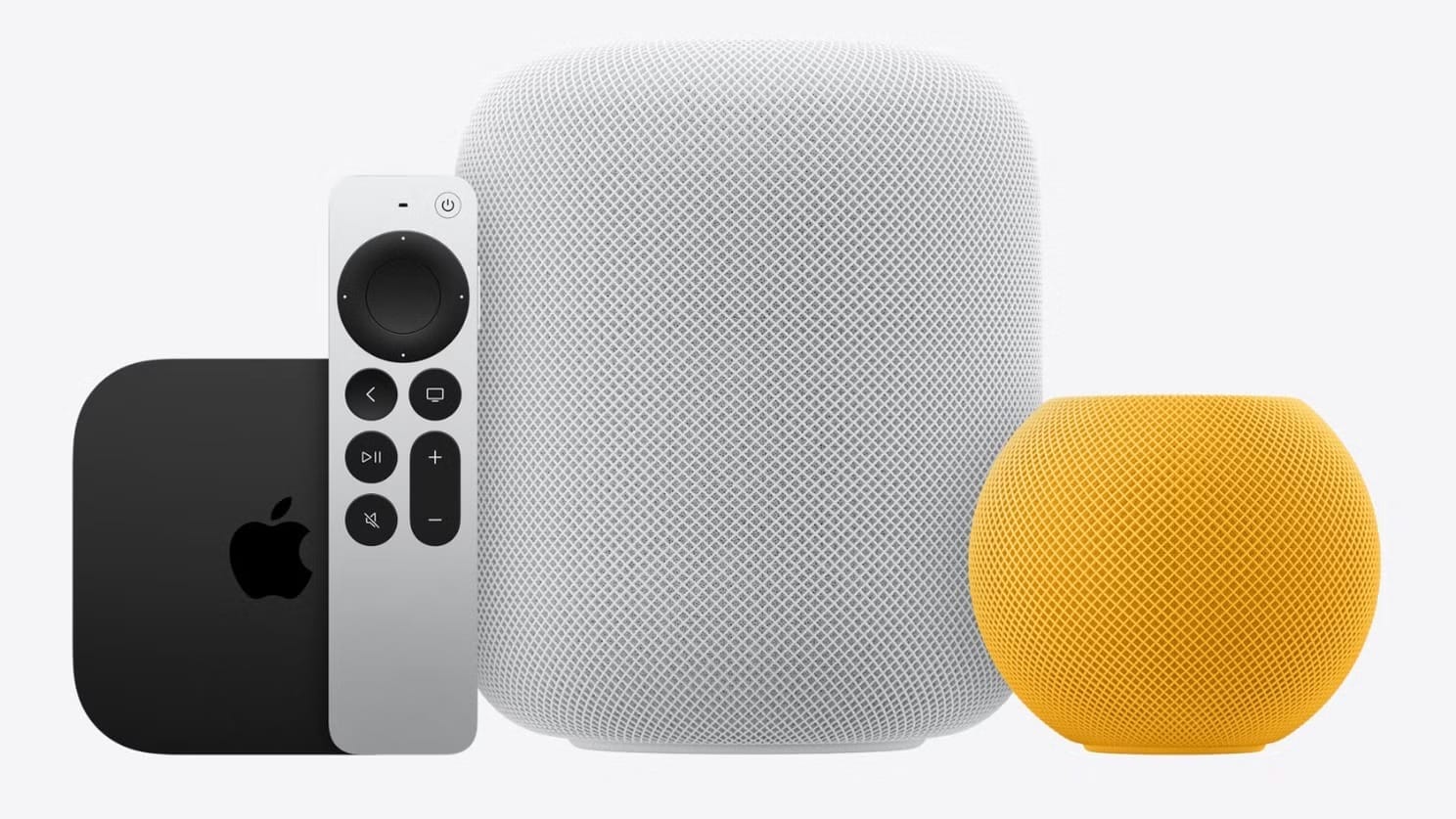
The most promising alternative is the Sensereo MSC-1, the first smoke and CO combo alarm built on Matter 1.4 over Thread. At $69.99, it detects both smoke and carbon monoxide, displays real-time CO levels on a built-in LCD, and works with Apple Home through Matter — no proprietary hub required. Your HomePod mini or Apple TV 4K already functions as the Thread Border Router it needs. The trade-off: European certification only (EN14604 and EN50291). Using it as your primary US detector could complicate your homeowner’s insurance. That is a real consideration, not a footnote.
How the surviving options compare for Apple Home users who need smoke detection right now.
| Option | Detects | Apple Home | US Certified | Price | Available |
|---|---|---|---|---|---|
| Owl Wired | Smoke + CO | Native HomeKit | Yes (UL-268) | $189 | Sold out (April 2026) |
| Sensereo MSC-1 | Smoke + CO | Matter 1.4 | EU only | $69.99 | Yes |
| HomePod Sound Recognition | Listens for alarms | Built-in | N/A | Free | Yes |
 Ad
AdHomePod Sound Recognition Is the Fix Nobody Turns On
Here is where Apple quietly built the most practical answer. Every HomePod and HomePod mini running current software includes Sound Recognition — a feature that continuously listens for the specific alarm pattern of smoke and CO detectors. When it hears one, it sends a Critical notification that bypasses Do Not Disturb, Focus modes, and silent mode on every iPhone, iPad, and Apple Watch linked to your Home.
Setting it up takes thirty seconds. Open the Home app, tap the three-dot menu, go to Home Settings, then Safety & Security, toggle on Smoke & CO Alarm under Sound Recognition. Done. All audio processing runs locally on the HomePod — nothing gets sent to Apple’s servers, according to Apple’s support documentation for HomePod Sound Recognition.
Your HomePod cannot detect smoke particles or carbon monoxide. But for a household that already has traditional detectors — and it should, that is literally the law — Sound Recognition adds smart notifications at zero additional cost. Pair it with HomeKit cameras and the Critical notification shows a live feed so you can check the situation from anywhere. If your Apple Home already has sensors in every room, Sound Recognition slots right into that safety layer without adding another device to the wall.
Why Smart Smoke Detection Changes Everything
Why bother going smart when a thirty-dollar detector from the hardware store screams just fine? Well, the detector itself is only half the value. The automations are the other half.
A HomeKit-connected smoke detector triggers an entire emergency scene automatically. Smoke detected at 3 AM? Your Apple Home turns on every light in the house so you can see the fastest exit. It unlocks smart locks so doors are not blocking egress. It raises smart blinds to clear window escape routes. It shuts off your connected thermostat so the HVAC stops pushing smoke through the ductwork. That is a system that helps you escape, not just one that screams.
According to Apple’s developer documentation for HomeKit accessories, smoke and CO detection is a supported service type with full automation trigger capabilities. If you are building your first Apple HomeKit smart home, smoke detection belongs in your first round of purchases — not as an afterthought when you run out of smart lights to add.
Accessibility and Clarity
Smart smoke detection addresses a genuine accessibility gap. Traditional detectors rely entirely on audible alarms — a serious limitation for deaf and hard-of-hearing users. HomePod Sound Recognition paired with Apple Watch delivers haptic vibrations and visual alerts directly to the wrist, providing fire notification without sound dependency. A HomeKit-connected detector can go further by triggering smart lights to flash throughout the home, creating the visual fire alarm that building codes require in commercial spaces but almost never exist in residential ones.
For users with mobility limitations, the automation layer matters even more. Automatic light activation, unlocked doors, and raised blinds remove physical barriers during an emergency without requiring you to reach a panel, find your phone, or navigate stairs to a breaker box.
Matter Changes the Math
The reason HomeKit smoke detectors collapsed is straightforward: Apple’s MFi certification was expensive, and the addressable market was small. Matter eliminates that friction. One certification covers Apple Home, Google Home, Amazon Alexa, and SmartThings simultaneously. That is a fundamentally different business case for manufacturers.
The Sensereo MSC-1 is early proof of this shift. More Matter smoke and CO detectors are expected through 2026 and into 2027 as manufacturers adopt Matter 1.4, which added dedicated smoke and CO alarm device types to the specification. Thread networking helps too. Instead of Wi-Fi detectors that drain batteries or require hardwiring, Thread devices form a low-power mesh network with CR123 batteries lasting three years or more.
For right now, the honest recommendation for most US Apple Home users: pair traditional smoke and CO detectors with HomePod Sound Recognition. It costs nothing beyond the HomePod you probably already own, it works today, and it delivers Critical notifications on every device you carry. When Matter detectors with US certification arrive at real prices, upgrade then. The market is not ideal. But your Apple Home does not have to be deaf to danger while you wait.

Related Posts
Home Assistant Turns Every Smart Device Into an Apple HomeKit Accessory
Apr 01, 2026
Your Apple Home Is Missing Its Most Important Sensor
Mar 29, 2026
Friday Night Baseball on Apple TV Delivers the Best MLB Broadcast Nobody Expected
Mar 28, 2026