

🎧 Listen to this article
Prefer to listen? An audio version of this article is available for accessibility and convenience.
Apple AirPods Max 2 ship with the H2 chip, active noise cancellation that is 1.5 times more effective, and a batch of smart audio features that the original pair never had access to. Pre-orders open March 25, 2026, at the same $549 price, with deliveries expected in early April.
That sounds like a straightforward spec bump, but the real story sits underneath the familiar aluminum ear cups. The H2 chip does not just improve noise cancellation. It unlocks Adaptive Audio, Conversation Awareness, Live Translation powered by Apple Intelligence, Voice Isolation for calls, and even a Camera Remote feature through the Digital Crown. Owners of the original AirPods Max or the 2024 USB-C refresh have been waiting years for these capabilities, and the decision about whether to upgrade depends entirely on which of those features you actually need.
I think Apple made a thoughtful compromise here. The physical design stays identical — same 386.2 grams, same mesh canopy, same stainless steel headband, same Smart Case that still does not fully protect the ear cushions. That last detail bothers me. A $549 pair of headphones deserves a case that covers the entire unit, and after five years Apple still has not addressed it.
 Ad
AdWhat the H2 Chip Actually Changes Inside AirPods Max 2
The Apple H2 chip replaces the H1 that powered every previous AirPods Max model, including the 2024 USB-C refresh that swapped Lightning for USB-C but changed nothing else under the hood. H2 is the same processor that drives AirPods Pro 2, and bringing it to the over-ear line means a massive feature uplift arrives on day one.
Active noise cancellation improves by 50 percent, according to Apple. In practical terms, that means airplane engines and commuter-train rumble should fade further into the background. A new digital signal processing algorithm also refines Transparency mode, so ambient sound passes through with less of the artificial edge the original model sometimes introduced. If you have ever noticed a faint hiss when Transparency mode is active in a quiet room, Apple says the updated DSP addresses exactly that.
Bluetooth jumps from 5.0 to 5.3. That does not change the sound quality over wireless — Apple still uses its proprietary codec for that — but it improves connection stability, lowers latency in gaming scenarios, and enables the new head-gesture controls for Siri. Nod to accept a call or shake your head to decline, without touching the headphones.
The high dynamic range amplifier is new. Apple designed it specifically for H2, and it handles a wider spread between quiet and loud passages without compressing the signal. For lossless audio over USB-C at 24-bit, 48 kHz, this matters. The original amplifier in the H1 models was already solid, but audiophiles who connect wired will notice cleaner transients on tracks with sharp dynamic swings.
Adaptive Audio and Conversation Awareness Arrive at Last
These two features already exist on AirPods Pro 2 and AirPods Pro 3, and their absence from the previous AirPods Max felt like Apple punishing its most expensive headphone customers. Adaptive Audio dynamically blends noise cancellation and Transparency mode depending on your environment. Walk from a noisy coffee shop onto a quiet sidewalk and the mix adjusts automatically — no tapping the noise control button, no reaching for your phone.
Conversation Awareness takes it a step further. Start speaking to someone and AirPods Max 2 lower your media volume, reduce background noise, and let the other person’s voice through. Stop talking and the music fades back up. I find this feature genuinely useful on the Pro line, and having it on over-ear headphones where you cannot just pop one earbud out is an even bigger quality-of-life upgrade. You keep the headphones on your head and still carry on a quick conversation with a coworker or barista.
If you already set up Adaptive Audio on your AirPods Pro, the behavior on AirPods Max 2 works identically — same toggle path in Settings, same on-the-fly blending. The main difference is that AirPods Max apply it across a larger driver surface, so transitions between noise cancellation levels feel slightly more gradual to my ear.
Live Translation, Voice Isolation, and the Camera Remote Trick
Live Translation is the flashiest new addition. Powered by Apple Intelligence, it translates spoken conversation in real time and plays the result in your ear. It requires an iPhone running iOS 26.4 or later, and it works with the languages Apple Intelligence currently supports. I think this could be a compelling reason to upgrade on its own for anyone who travels internationally, but keep in mind that translation quality depends heavily on ambient noise and speaking clarity.
Voice Isolation prioritizes your voice during calls while blocking ambient noise. The nine microphones in AirPods Max 2 — eight for noise cancellation, three for voice pickup — feed into the H2’s computational audio engine to separate your speech from background clutter. If you take phone calls or video meetings in noisy environments, this is a tangible improvement over the original model.
The Camera Remote feature is unexpected. Rotate the Digital Crown while your iPhone or iPad camera is open and it controls the shutter, letting you trigger photos and video recording without touching the device. This requires iOS 26.4 and feels like a niche addition, but content creators who prop their iPhone on a tripod and record hands-free might appreciate the convenience. The Digital Crown still handles volume and playback with the same satisfying click resistance it always had.
 Ad
AdWhat Did Not Change — And Why That Matters
The list of unchanged specs is almost as long as the list of improvements. Battery life remains at 20 hours with noise cancellation active. Weight stays at 386.2 grams (13.6 ounces). The physical dimensions — 168.6 x 187.3 x 83.4 millimeters — are identical. The mesh canopy, stainless steel frame, aluminum ear cups, and memory foam cushions carry over untouched.
The Smart Case ships in the same design that has frustrated owners since 2020. It leaves the headband exposed, it does not protect the ear cushions from dust when stored mesh-side up, and it relies on magnets that occasionally lose grip in a packed bag. Apple had five years to redesign it. They did not.
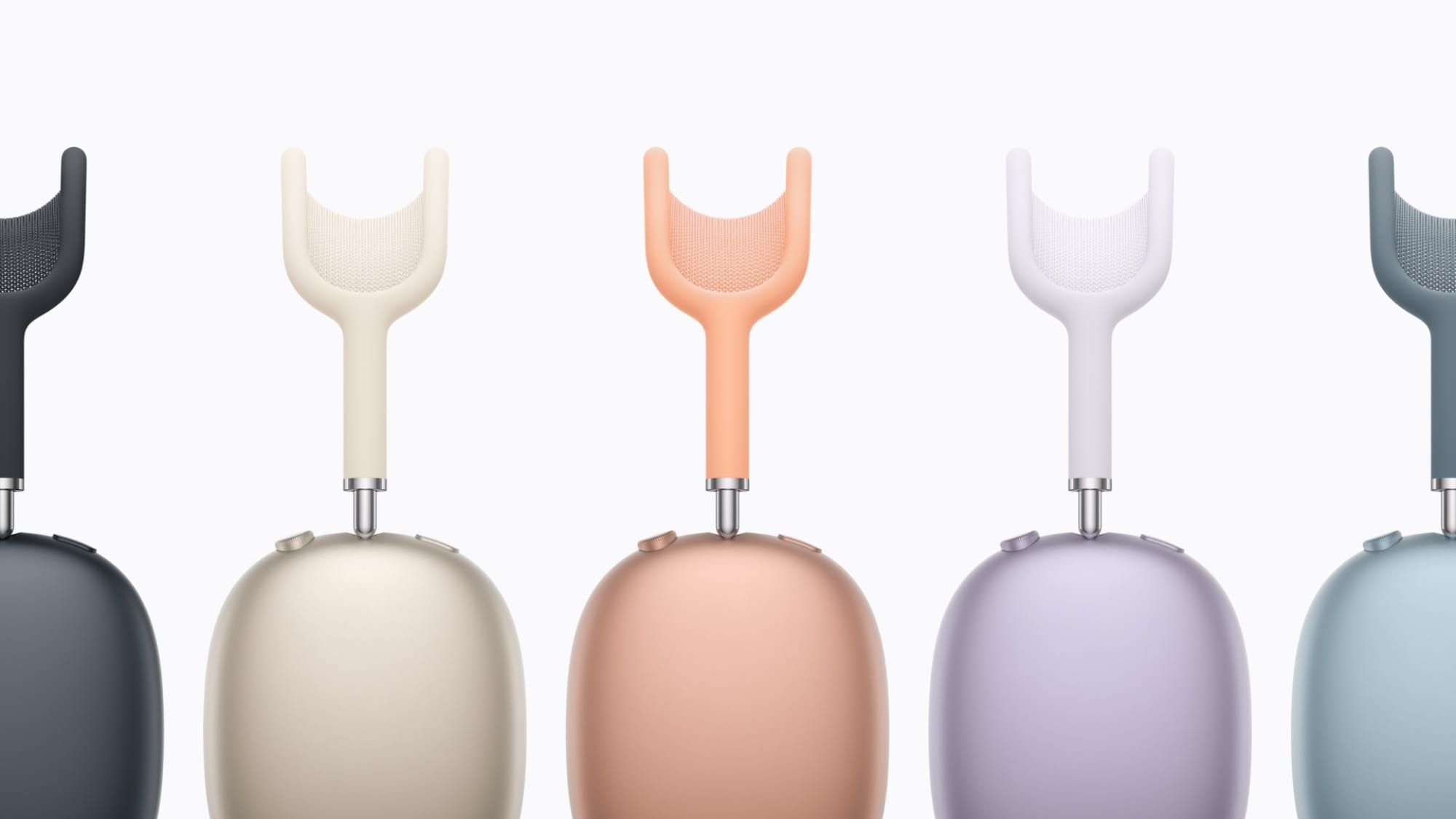
Colors stay the same as the 2024 USB-C model: Midnight, Starlight, Blue, Purple, and Orange. If you were hoping for a return of the original Space Gray or Silver finishes, that did not happen.
For anyone comparing these to the competition, the weight and comfort discussion matters more than the spec sheet suggests. I covered the Beats Studio Pro versus AirPods Max comparison recently, and the core comfort trade-offs have not changed with this generation. AirPods Max 2 remain heavier than most over-ear alternatives. Extended listening sessions beyond three hours still require occasional repositioning.
Should You Upgrade from the Original or USB-C Model
Here is my honest take. If you own the 2024 USB-C AirPods Max and use them primarily for music listening with noise cancellation, the upgrade is hard to justify at full price. The H1 chip handled noise cancellation and Spatial Audio competently. You lose nothing by waiting.
If you own the original Lightning model, the calculus shifts. You gain USB-C compatibility (essential now that Apple has abandoned Lightning across its entire product line), lossless audio over USB-C, and the full H2 feature set. Selling the Lightning pair while it still holds some resale value and applying that toward AirPods Max 2 makes financial sense.
If you do not currently own any AirPods Max and you want Apple’s best over-ear headphones, this is the definitive version. Every smart audio feature Apple has developed since 2022 is included. The $549 price is unchanged from the original 2020 launch, and inflation makes that effectively cheaper in real terms.
Here is a quick breakdown of the three AirPods Max generations so you can see exactly where the differences land.
| Feature | AirPods Max 2 (2026) | AirPods Max USB-C (2024) | AirPods Max Original (2020) |
|---|---|---|---|
| Chip | H2 | H1 | H1 |
| ANC Effectiveness | 1.5x improved | Baseline | Baseline |
| Bluetooth | 5.3 | 5.0 | 5.0 |
| Adaptive Audio | Yes | No | No |
| Live Translation | Yes | No | No |
| Lossless via USB-C | Yes | Yes | No |
| Port | USB-C | USB-C | Lightning |
| Price | $549 | $549 | $549 |
The Environmental Angle Worth Noting
Apple calls out sustainability improvements: 100 percent recycled copper in circuit boards, 100 percent recycled rare earth elements in magnets, 90 percent recycled polyester in the canopy and cushion yarn, and fiber-based packaging. These are not features you will feel on your head, but they do address a legitimate concern. Over-ear headphones use more raw material than earbuds, and knowing that the magnets, circuit boards, and fabric carry a lower environmental footprint is a quiet win. Apple’s environmental report for AirPods Max 2 is available on the Apple Product Environmental page.
Pre-orders for Apple AirPods Max 2 open March 25, 2026, at apple.com and Apple Store locations in more than 30 countries. New subscribers get three months of Apple Music included. The question is not whether AirPods Max 2 are better than what came before — they clearly are. The question is whether the gap between H1 and H2 is wide enough to justify $549 again, and for most current owners, I think the answer depends on how often you actually talk on calls, travel internationally, or wish your headphones understood when you started a conversation.

Related Posts
Your AirPods Work with Android — Here’s What Apple Holds Back
Apr 10, 2026
Your AirPods Are Collecting Grime That’s Killing Your Sound
Apr 09, 2026
Your AirPods Have a FaceTime Trick That Changes Group Calls
Apr 02, 2026