

🎧 Listen to this article
Prefer to listen? An audio version of this article is available for accessibility and convenience.
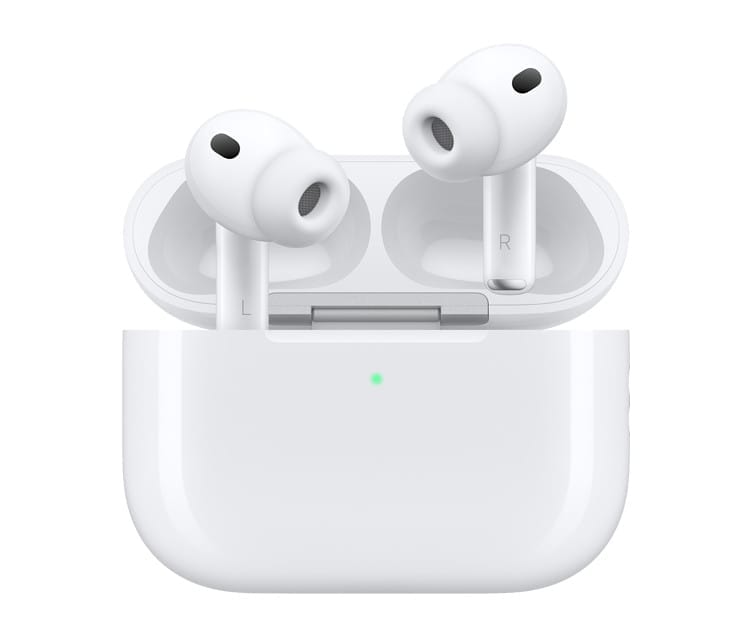
AirPods Pro 3 and Samsung Galaxy Buds 4 Pro both cost $249, both promise studio-grade noise cancellation, and both claim to deliver the best wireless audio you can strap to your ears. The catch? Each pair locks its best features behind an ecosystem wall, and the one you should buy depends almost entirely on which phone lives in your pocket. Well, that and whether you care more about hearing health features or a planar tweeter.
Samsung just launched the Galaxy Buds 4 Pro on February 25, 2026, and the internet is already comparing them to Apple’s six-month-old AirPods Pro 3. I get it. Same price, same IP57 rating, same promise. But the two companies took wildly different bets on what “premium” means. Apple bet on health sensors. Samsung bet on audiophile hardware. And neither pair works at full potential unless you’re inside the right ecosystem. So let’s actually break this down.
 Ad
AdWhat Each Pair Brings to the Table
The AirPods Pro 3 run Apple’s H2 chip with a custom high-excursion driver. Apple doesn’t publish the driver size, which is annoying, but the sound profile leans V-shaped—boosted bass, crisp highs, slightly recessed mids. If you liked the AirPods Pro 2’s more neutral tuning, the Pro 3 shift might catch you off guard. That said, the low end hits harder and the soundstage is noticeably wider than the second generation.
Samsung’s approach is different. The Galaxy Buds 4 Pro use a two-way speaker system: an 11mm dynamic woofer paired with a 5.5mm planar tweeter, which is unusual for earbuds at any price. Planar drivers handle high-frequency detail with less distortion than traditional balanced armatures, and the result is a level of treble clarity that the AirPods Pro 3 simply cannot match. I mean think about it—Samsung put the kind of driver technology you normally find in $300+ over-ear headphones into a pair of earbuds.
But sound quality is only half the story. The Galaxy Buds 4 Pro ship with Bluetooth 6.1, the newest standard available, compared to the AirPods Pro 3’s Bluetooth 5.3. Samsung also supports their proprietary SSC UHQ codec, which streams 24-bit/96kHz hi-res audio over Bluetooth. That’s genuinely impressive. One problem: it only works with Samsung phones running One UI 6.1.1 or later. Pair the Buds 4 Pro with an iPhone, and you’re stuck on AAC. The same codec the AirPods use.
Noise Cancellation Is Not Even Close
Apple claims the AirPods Pro 3 deliver twice the noise cancellation of the Pro 2. Independent measurements from RTINGS put the actual attenuation at roughly 90%. That is aggressive. Coffee shop chatter, airplane cabin drone, the lawnmower across the street—it all drops to a murmur. Samsung’s Adaptive ANC 2.0 on the Buds 4 Pro measures at about 84% according to SoundGuys testing. Still good. But 84% and 90% feel noticeably different when you’re sitting on a plane for four hours.
Where Samsung closes the gap is Transparency mode. Both pairs let ambient sound through when you need it, and both adjust automatically when you start talking. Apple calls theirs Adaptive Transparency with Conversation Awareness. Samsung calls theirs Voice Detect. They do essentially the same thing. Neither is perfect—both occasionally trigger when you clear your throat or cough, which gets old fast.
 Ad
AdThe Ecosystem Tax You Need to Understand
This is where the buying decision gets real. The AirPods Pro 3, when connected to an iPhone running iOS 26, give you Personalized Spatial Audio with head tracking, Adaptive EQ, automatic device switching across every Apple device you own, and Find My integration through the U2 chip in the case. You also get an FDA-authorized hearing aid for mild to moderate hearing loss, a clinical-grade hearing test, and a heart rate sensor that tracks your pulse during 50+ workout types. Those health features alone justify the price for a lot of people.
The Galaxy Buds 4 Pro on a Samsung Galaxy phone? You get 24-bit hi-res audio via SSC UHQ, 360 Audio with head tracking, Adapt Sound personalization, Auracast broadcasting, Super Broadband calls with AI voice enhancement, and seamless switching between Galaxy devices. That is a genuinely competitive feature set. Some of it, like the hi-res codec and 360 Audio, actually surpasses what Apple offers on paper.
Now here’s the part Samsung would rather you not think about. Pair the Galaxy Buds 4 Pro with an iPhone, and you lose the hi-res codec, 360 Audio, Adapt Sound, Auracast, device switching, and basically every software feature that makes them special. You’re left with Bluetooth earbuds that sound decent but offer nothing the AirPods Pro 3 can’t do better on the same phone. Why would you spend $249 on earbuds that can’t access their own best features?
Battery Life Tells a Weird Story
Apple wins the earbud battery race with 8 hours of ANC playback versus Samsung’s 6 hours. That’s a meaningful difference on a long flight or work day. But Samsung wins on total case capacity: 26 hours with ANC versus Apple’s 24 hours. So the Buds 4 Pro die faster per session but the case gives you more recharge cycles.
In practice? The AirPods Pro 3 are better for people who wear earbuds for extended stretches without putting them back in the case. The Galaxy Buds 4 Pro suit the grab-and-go crowd who pocket the case between short listening sessions. Both charge via USB-C and wireless. Apple adds MagSafe and Apple Watch charger compatibility, which is a nice touch if you already travel with those cables.
At-A-Glance: AirPods Pro 3 vs Galaxy Buds 4 Pro across the specs that matter most for everyday use.
| Feature | AirPods Pro 3 | Galaxy Buds 4 Pro |
|---|---|---|
| Price | $249 | $249.99 |
| ANC Reduction | ~90% (RTINGS measured) | ~84% (SoundGuys measured) |
| Battery (ANC On) | 8 hrs earbuds / 24 hrs total | 6 hrs earbuds / 26 hrs total |
| IP Rating | IP57 | IP57 |
| Hi-Res Audio | AAC only (lossless via Vision Pro) | 24-bit/96kHz via SSC UHQ (Samsung only) |
| Best With | iPhone, iPad, Mac, Apple TV | Samsung Galaxy phones |
| Standout Feature | FDA-authorized hearing aid + heart rate | Planar tweeter + Bluetooth 6.1 |
How They Actually Feel in Your Ears
The AirPods Pro 3 weigh 5.55 grams per earbud. The Galaxy Buds 4 Pro come in slightly lighter at 5.1 grams. Half a gram sounds irrelevant until you’ve worn either pair for three hours straight. I notice that the AirPods Pro 3’s stem design creates a subtle lever effect—after extended wear, there’s a faint downward pull that the Buds 4 Pro’s stemless design avoids. Apple includes five silicone tip sizes including the new XXS, all foam-infused. Samsung’s tips are standard silicone.
The tactile controls differ too. Apple uses a squeeze-and-press stem gesture that takes about a day to learn. Samsung uses a touch-and-hold surface on the earbud face. Both work fine. Samsung’s feels less deliberate, though—accidental taps happen when you’re adjusting the fit, which can skip a track or toggle ANC at exactly the wrong moment.
The Feature Apple Has That Samsung Cannot Copy
The hearing health suite on the AirPods Pro 3 is not a gimmick. The built-in hearing test takes about five minutes and produces a clinically validated audiogram. If the test detects mild to moderate hearing loss, the earbuds apply a real-time sound profile that acts as an FDA-authorized hearing aid. For anyone who has priced standalone hearing aids—which start around $1,000 and go well past $5,000—getting that functionality inside a pair of $249 earbuds is a genuine shift.
The heart rate sensor uses infrared light pulsed at 256 times per second. It integrates with the iPhone Fitness app and supports over 50 workout types. Think about it: you can track your heart rate during a run without wearing an Apple Watch. Samsung has nothing equivalent. Their Buds 4 Pro focus on audio quality and call features, not health monitoring. If hearing health or workout tracking matters to you, the comparison ends here.
If you’re weighing whether the AirPods Pro 3 are worth the upgrade from the second generation, setting up Spatial Audio properly is one of the first things worth doing—it transforms music and movies in a way flat stereo output never will. And if you already own the Pro 3 and haven’t explored all the hidden settings on your iPhone, you’re leaving features on the table.
Who Should Buy Which
Buy the AirPods Pro 3 if you use an iPhone. Simply put, no other earbud on the market integrates as deeply with iOS 26. The health features, the Spatial Audio experience, the automatic device switching, Find My—none of it works this seamlessly with anything else. And the ANC is the best in any earbud, period.
Buy the Galaxy Buds 4 Pro if you use a Samsung Galaxy phone and care about sound quality above everything else. The planar tweeter and hi-res codec deliver audio fidelity that the AirPods cannot match inside the Samsung ecosystem. The six-mic array with bone conduction also makes phone calls cleaner, which matters if you take a lot of work calls.
Do not buy the Galaxy Buds 4 Pro for an iPhone. I cannot say this strongly enough. You lose every premium feature that justifies the price. At that point, you are paying $249 for basic Bluetooth earbuds with good ANC when the AirPods Pro 3 deliver a dramatically richer experience on the same phone. Unless you plan to switch to Samsung within the month, it makes zero sense.
The bottom line is not about which earbuds are objectively better. Both are excellent. It’s about which phone you pull out of your pocket every morning. That phone has already made the decision for you—you just need to follow through.

Related Posts
Your AirPods Max Are Collecting Grime You Cannot See
Mar 04, 2026
Your AirPods Have Dozens of Hidden Settings on Your iPhone — Here Is Every One
Mar 03, 2026
Your AirPods Have Three Spatial Audio Modes You Probably Never Switched
Mar 03, 2026